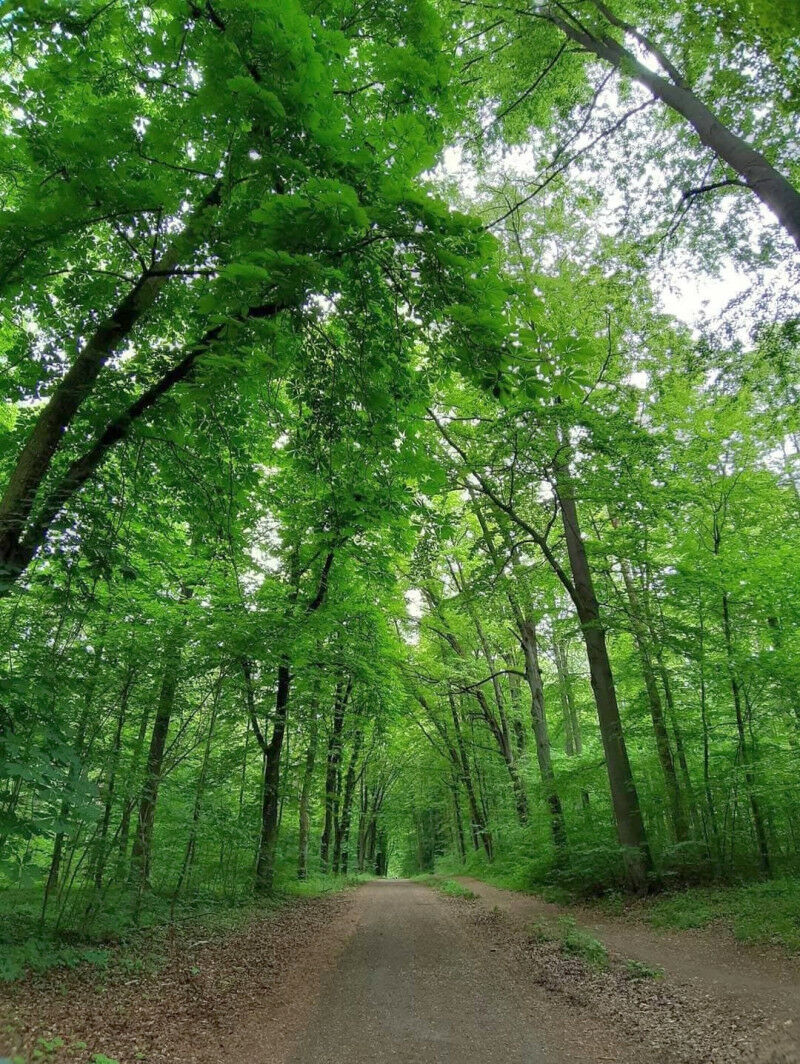
Typical beech forest in northern Germany: the scientists took wood cores from dominant trees at a total of 30 sites. Photo: Banzragch Bat-Enerel
Typical beech forest in northern Germany: the scientists took wood cores from dominant trees at a total of 30 sites. Photo: Banzragch Bat-Enerel Research team from the University of Göttingen demonstrates widespread drought stress in copper beech Wood cores from copper beech. The samples are glued to wooden strips and prepared with razor blade or sandpaper so that the annual rings are clearly visible on the smooth surfaces and can be measured and dated microscopically. Photo: Stella Gribbe More and more trees are suffering the consequences of the man-made climate change of recent decades. The growth of the copper beech - mainly at home in Central Europe and Germany's most important native forest tree species - has so far declined mainly in southern Europe. A research team from the University of Göttingen has now been able to show that the copper beech also suffers from increasing drought stress in summer in northern Germany. This climatic stress was particularly pronounced at warmer sites with a higher stand density and very sandy soils.
TO READ THIS ARTICLE, CREATE YOUR ACCOUNT
And extend your reading, free of charge and with no commitment.