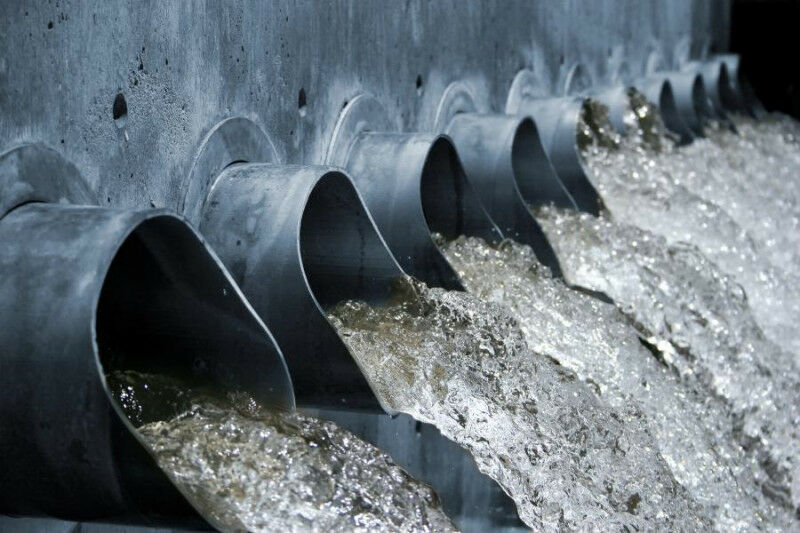
Water flows out of a series of pipes in a water treatment plant
Perand polyfluoroalkyl substances, known as PFAS, are chemicals that are commonly found in drinking water despite being hazardous to human health. Water flows out of a series of pipes in a water treatment plant - A team of Johns Hopkins engineers has discovered a method to filter out a class of harmful industrial "forever chemicals" commonly found in the country's drinking water. Known as forever chemicals because they last thousands of years, perand polyfluoroalkyl substances, commonly known as PFAS, are a group of synthetic organic contaminants used in a variety of industrial processes and consumer products, including non-stick cookware coatings, food wrappers, water-resistant clothing, and furniture textiles. When these products are used, discarded, or improperly dumped, PFAS leach into water systems. Once there, they are incredibly difficult to treat because of unique chemical properties imparted by carbon-fluorine bonds-some of the strongest in chemistry. The precise amount of PFAS in the country's drinking water is unknown, but experts say that it ranges from widespread to almost ubiquitous. Long-term, low-concentration exposure to PFAS can hamper the immune system, interfere with hormones, and reduce the effectiveness of vaccines.
TO READ THIS ARTICLE, CREATE YOUR ACCOUNT
And extend your reading, free of charge and with no commitment.