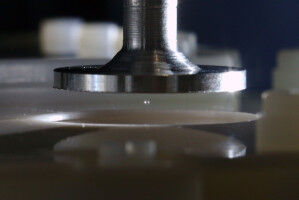
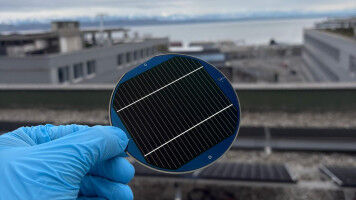
Flexible CIGS solar cells are composed of very thin layers, including a compound composed of the elements copper, indium, gallium and selenium. The layers are deposited onto flexible polymer substrates, mainly by vacuum processes. Image: Empa
Flexible CIGS solar cells are composed of very thin layers, including a compound composed of the elements copper, indium, gallium and selenium. The layers are deposited onto flexible polymer substrates, mainly by vacuum processes. Image: Empa - One year after announcing an efficiency record, scientists have achieved a new mark of 22.2% for flexible CIGS solar cell on polymer film. Solar cells of this type are especially suited for applications on buildings, vehicles, satellites, airships, and mobile devices. researchers have - once again - improved the efficiency of CIGS flexible solar cells. Independently certified measurements revealed a power conversion efficiency of 22.2% to convert light into electricity, an improvement from their previous record value of 21. To compare, the best efficiency of a rigid crystalline silicon solar cell is 26.
TO READ THIS ARTICLE, CREATE YOUR ACCOUNT
And extend your reading, free of charge and with no commitment.