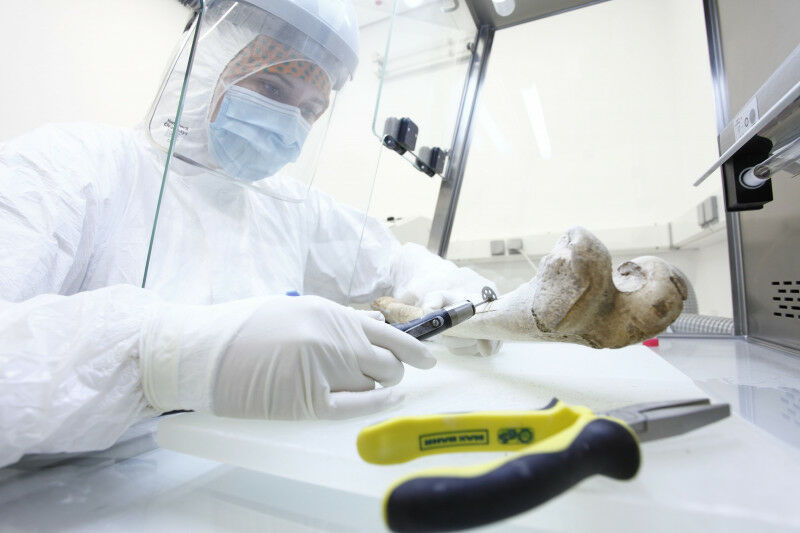
Ancient DNA extraction in the Palaeogenetics lab at Johannes Gutenberg University Mainz
New study published in the journal Cell. Ancient DNA extraction in the Palaeogenetics lab at Johannes Gutenberg University Mainz - The genetic origins of the first agriculturalists in the Neolithic period long seemed to lie in the Near East. A new study published in Cell shows that the first farmers actually represented a mixture of Ice Age hunter-gatherer groups, spread from the Near East all the way to south-eastern Europe. Researchers from Johannes Gutenberg University Mainz as well as from the University of Bern and the University of Fribourg were involved in the study. The method they developed could help reveal other human evolution patterns with unmatched resolution. The first signs of agriculture and a sedentary lifestyle are found in the so-called Fertile Crescent, a region in the Near East where people began to settle down and domesticate animals and plants about 11,000 years ago. The question of the origin of agriculture and sedentism has occupied researchers for over 100 years: did farming spread from the Near East through cultural diffusion or through migration? Genetic analyses of prehistoric skeletons so far supported the idea that Europe's first farmers were descended from hunter-gatherer populations in Anatolia.
TO READ THIS ARTICLE, CREATE YOUR ACCOUNT
And extend your reading, free of charge and with no commitment.