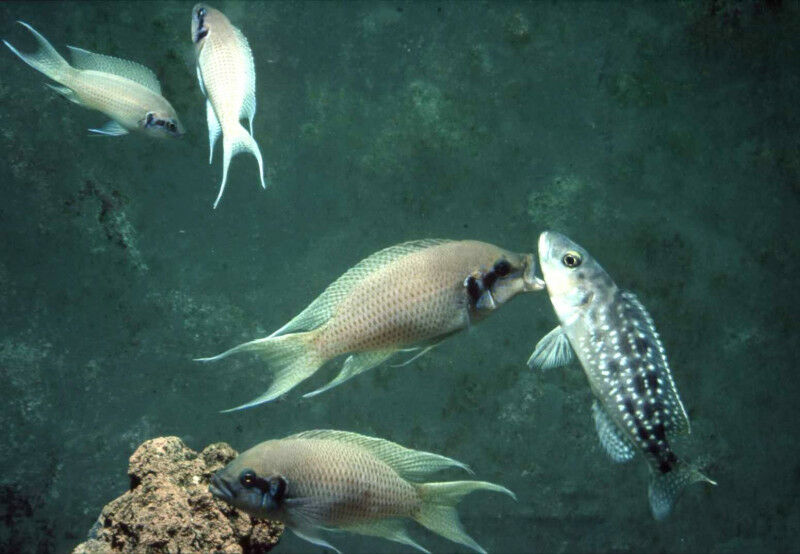
 Attack of a breeding male on a threatening predator. The small fish in the picture are brood care helpers, which benefit from this defence - this illustrates the (genetic) fitness benefit helpers get by the protection through other group members.
Attack of a breeding male on a threatening predator. The small fish in the picture are brood care helpers, which benefit from this defence - this illustrates the (genetic) fitness benefit helpers get by the protection through other group members. Courtesy of M. Taborsky - The survival chances of group members are often greater in large than in small groups. In some species, non-reproducing group members therefore help raising offspring, even if they are unrelated. In an experimental study, researchers at the University of Bern investigated this seemingly altruistic behavior in cooperatively breeding fishes. Their results indicate that helping can evolve by natural selection through increased survival chances of brood care helpers by selectively increasing group size. Cooperation is widespread in nature, most prominently exemplified by social insects like ants and honey bees, apart from humans.
TO READ THIS ARTICLE, CREATE YOUR ACCOUNT
And extend your reading, free of charge and with no commitment.
Your Benefits
- Access to all content
- Receive newsmails for news and jobs
- Post ads