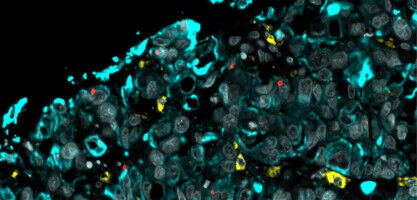
A team from the University of Geneva shows that early alterations in the brain’s clearance system could contribute to vulnerability to psychosis.
How can we explain the onset of psychotic symptoms characteristic of schizophrenia? Despite their major and often irreversible impact on intellectual abilities and autonomy, the biological mechanisms that precede their emergence remain poorly understood. A team from the Department of Psychiatry at the Faculty of Medicine and the Synapsy Center for Neuroscience Research in Mental Health at the University of Geneva provides new insight into this question. Early dysfunction of the glymphatic system, the network responsible for removing waste from the brain, could be a key vulnerability factor. This research has been published in Biological Psychiatry: Global Open Science.
Hallucinations and delusions are among the characteristic psychotic symptoms of schizophrenia spectrum disorders, which may also be accompanied by social withdrawal and cognitive decline. These disorders, considered neurodevelopmental conditions, most often emerge during adolescence or early adulthood and have an estimated prevalence of 0.5-3% in the general population.
The hippocampus, a brain region notably involved in memory and cognition, is known to play a major role in the emergence of these clinical manifestations. A first psychotic episode, often marking the onset of schizophrenia, may be accompanied by a decline in cognitive functions. Understanding the brain vulnerabilities present before clinical onset is therefore crucial for preventing, delaying, or reducing symptom severity, particularly in individuals at risk.
This cerebral drainage system may promote inflammation and neuronal toxicity when it is not functioning properly.
Is the brain’s clearance system involved?
The University of Geneva research team focused on 22q11.2 deletion syndrome, a genetic condition associated with a 30-40% risk of developing psychotic symptoms. This microdeletion includes genes involved in the integrity of the glymphatic system, which acts as a brain waste-clearance system. It eliminates metabolic waste, inflammatory molecules, and excess neurotransmitters through the circulation of cerebrospinal fluid and its exchanges with the interstitial fluid that surrounds brain cells. This cerebral drainage system may promote inflammation and neuronal toxicity when it is not functioning properly. Both of these phenomena are suspected of promoting the onset of psychotic symptoms.
A neurodevelopmental vulnerability
The team analysed a cohort of individuals with 22q11.2 deletion syndrome who were followed from childhood to adulthood and compared them to healthy individuals. Longitudinal imaging data, that were first collected more than twenty-five years ago, were reanalysed using new techniques that were optimised and automated by the team. Within the 22q11.2 group, a subgroup developed psychotic symptoms during follow-up, allowing the identification of distinct neurodevelopmental trajectories. Using a specific methodology applied to a diffusion magnetic resonance imaging technique - which measures the diffusion of water molecules in the brain - the team was able to indirectly estimate glymphatic system function.
The researchers thus observed that the brain’s clearance system was significantly altered in individuals carrying the 22q11.2 deletion, and already in childhood. Moreover, while glymphatic system efficiency normally increases during development, this progression was not observed in a subgroup of participants with the 22q11.2 deletion who developed psychotic symptoms. "This atypical trajectory suggests that a vulnerability resulting from an interaction between biological and environmental factors is present well before the onset of symptoms," explains Alessandro Pascucci, first author of the study, PhD candidate in the Department of Psychiatry at the Faculty of Medicine and at the Synapsy Center at the University of Geneva, and resident doctor in child psychiatry at the Fondation Pôle Autisme.
The researchers also measured the balance between excitatory and inhibitory signals in the hippocampus by studying two types of neurotransmitters: glutamate, which stimulates neuronal activity, and GABA, which inhibits it. The lower the efficiency of the brain’s clearance system, the more pronounced this imbalance was. "Excessive excitation can become toxic to neurons and contribute to alterations in certain brain regions that are particularly vulnerable and involved in psychosis, such as the hippocampus. Our results suggest a link between glymphatic system dysfunction, mechanisms of neurotoxicity, and psychosis," says the clinician-researcher.
Towards early intervention?
These results suggest that an impaired glymphatic system could make the brain more vulnerable to the onset of psychosis, possibly through inflammation or excessive neuronal excitation. The next steps will be to analyse the links between peripheral inflammation, observable in the blood, sleep quality, which is known to influence glymphatic function, and the onset of psychosis. "Identifying such modifiable predictive factors could pave the way for strategies to delay or even prevent a first psychotic episode," concludes Stephan Eliez, full professor in the Department of Psychiatry at the Faculty of Medicine and at the Synapsy Center at the University of Geneva, and director of the Pôle Autisme Foundation.This research is published in
Biological Psychiatry: Global Open Science
DOI: 10.1016/j.bpsgos.2026.100713