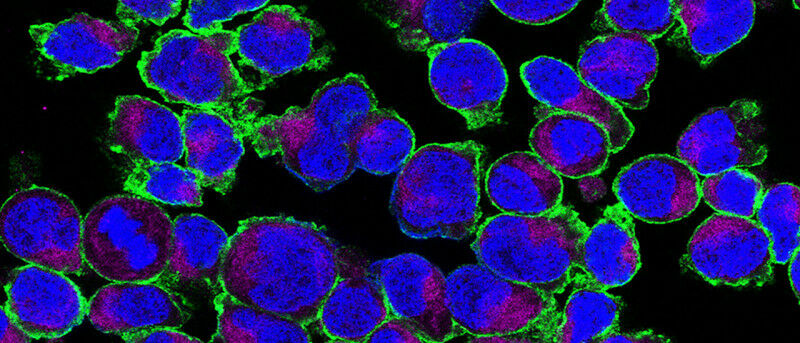
Expression of GLUT3 on activated T cells. GLUT3 (green) is localised on the cell surface, the mitochondria (violet) and the nucleus (blue) were also shown. Photo: AG Väth (Image: AG Väth)
Expression of GLUT3 on activated T cells. GLUT3 ( green ) is localised on the cell surface, the mitochondria ( violet ) and the nucleus ( blue ) were also shown. Photo: AG Väth (Image: AG Väth) 03/22/2022 - Excessive sugar consumption can promote inflammatory processes in the body and facilitate the development of autoimmune diseases. A research team at the University of Würzburg has now deciphered new details of these processes. People who consume sugar and other carbohydrates in excess over a long period of time have an increased risk of developing an autoimmune disease. In affected patients, the immune system attacks the body's own tissue and the consequences are, for example, chronic inflammatory bowel diseases such as Crohn's disease and ulcerative colitis, type 1 diabetes and chronic inflammation of the thyroid gland. New targets for therapy.
TO READ THIS ARTICLE, CREATE YOUR ACCOUNT
And extend your reading, free of charge and with no commitment.