(Image: Pixabay CC0)
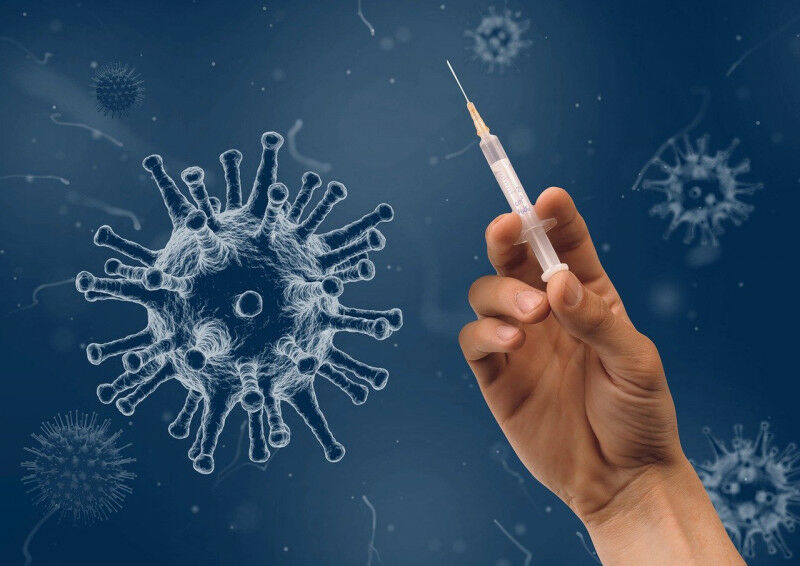
(Image: Pixabay CC0) - Scientists at the Institute of Virology and Immunology (IVI) and the University of Bern report on a Vesicular Stomatitis Virus (VSV)-vectored COVID-19 vaccine candidate. Their work shows that intramuscular immunization of mice with VSV-vectored COVID-19 vaccines is inducing strong antibody responses against the SARS-CoV-2 spike protein if the vector has been complemented with a specific protein. A COVID-19 vaccine candidate based on the vesicular stomatitis virus (VSV) vector encoding the SARS-CoV-2 spike antigen was developed in the USA and Israel. Although initial preclinical experiments showed promising results in Syrian hamster models, human volunteers did not mount proper immune responses to immunization and therefore further development of the vaccine candidate was abandoned. The research groups headed by Gert Zimmer and Charaf Benarafa of the IVI and University of Bern further explored this vector vaccine platform and solved the challenge to develop a VSV-vectored COVID-19 vaccine candidate with superior performance. They found that by adding the VSV G glycoprotein to the viral vector, intramuscular immunization resulted in high titers of spike antigen-specific neutralizing antibodies, even after a single immunization. Using this optimized vaccine, immunized mice were fully protected against a lethal dose of SARS-CoV-2 administered by the nasal route and partially protected if challenged with the Delta variant of SARS-CoV-2.
TO READ THIS ARTICLE, CREATE YOUR ACCOUNT
And extend your reading, free of charge and with no commitment.