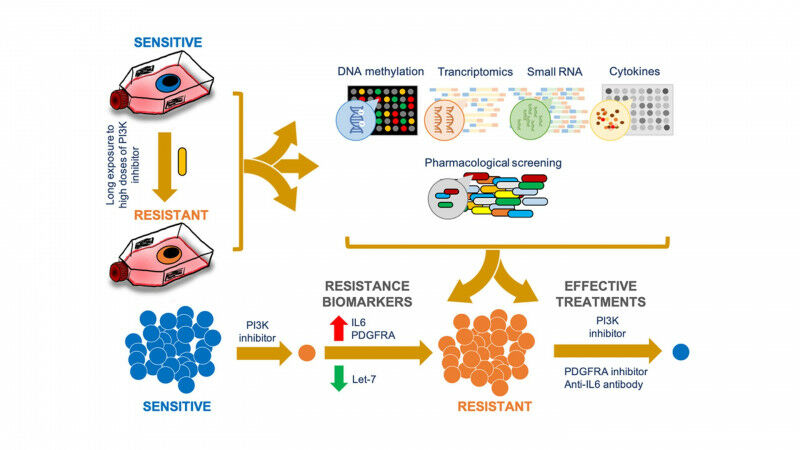
The Lymphoma Genomics group, directed by Prof. Francesco Bertoni at the Institute of Oncology Research (IOR, affiliated to USI and member of Bios+), identified a new mechanism behind the resistance to the drug idelalisib, used in the treatment of patients with follicular lymphoma and marginal zone lymphoma. One of the causes of failure of anticancer therapy in the treatment of lymphomas is the development of drug resistance, which implies a decrease in the therapeutic efficacy of a given drug. This is the case for the drug "idelalisib", used to treat patients with follicular lymphoma, chronic lymphatic leukemia and marginal zone lymphoma (MZL) and which received the approval by both the U.S. Food and Drug Administration (FDA) and SwissMedic. However, although its efficacy, idelalisib generates the development of drug resistance, restricting its use. It is therefore fundamental to study the mechanisms behind these resistances in order to optimize the use of idelalisib in the treatment of patients. The discovery In a study published in Haematologica, an important medical journal, the Lymphoma Genomics group, directed by Prof. Francesco Bertoni at the Institute of Oncology Research (IOR, affiliated to USI and member of Bios+), identified a new mechanism behind the resistance to the drug idelalisib (secondary resistance to PI3K inhibitors, the group of drugs to which idelalisib belongs) making drug-resistant cells sensitive to the drug in question. In particular, Alberto Arribas, Sara Napoli and colleagues developed a cellular model that mimicked the PIK3 inhibitors resistance observed in MZL patients.
TO READ THIS ARTICLE, CREATE YOUR ACCOUNT
And extend your reading, free of charge and with no commitment.