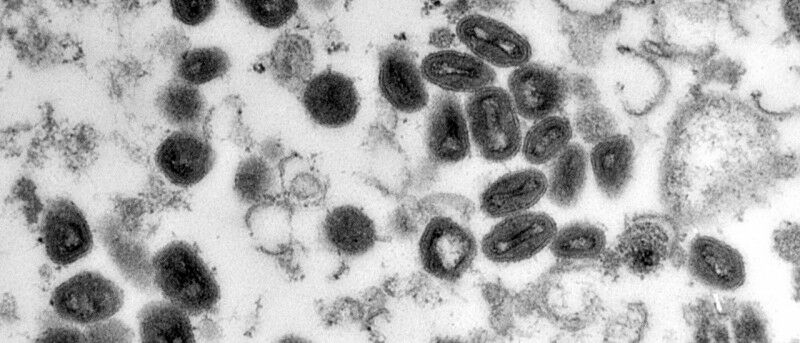
Smallpox viruses - here seen under the microscope - are among the deadliest pathogens in human history. Not quite as dangerous, but still worrying, is the current outbreak of monkeypox.
Smallpox viruses - here seen under the microscope - are among the deadliest pathogens in human history. Not quite as dangerous, but still worrying, is the current outbreak of monkeypox. Poxviruses pose a threat to humanity that should be taken seriously, as the current outbreak of monkeypox shows. A research team from the University of Würzburg is now working on the development of new drugs. The coronavirus pandemic is far from over, and already another virus is causing a stir: "International outbreak of monkeypox" was the cry in the media a few weeks ago, followed by daily headlines along the lines of "first case of monkeypox in Baden-Württemberg, Bavaria, Berlin and so on". Subsequent reports, like that of Bavaria's public broadcasting service Bayerischer Rundfunk - "Study: monkeypox pathogen mutates faster than expected" - or that of the German weekly news magazine Der Spiegel - "Doctor says of monkeypox: 'We have gone past the point in time where the virus could still have been stopped completely'", did nothing to calm the situation. And at the latest since the World Health Organisation (WHO) declared the monkeypox outbreak in more than 50 countries an "emergency of international concern" on 23 July, it should be clear to everyone: Viruses can cross species barriers at any time and cause novel diseases, known as zoonoses, in humans.
TO READ THIS ARTICLE, CREATE YOUR ACCOUNT
And extend your reading, free of charge and with no commitment.