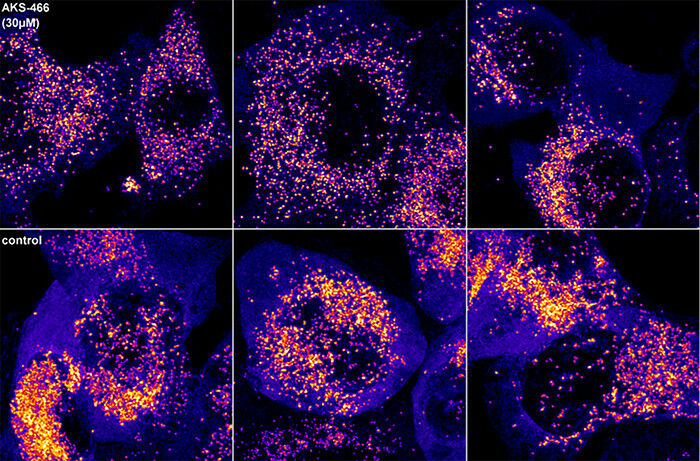
The cells in the top row were treated with the fluoxetine-like molecule AKS466 and then infected with SARS-CoV-2. The cells at the bottom were only infected; more viral RNA is detectable in them (lighter dots).
The cells in the top row were treated with the fluoxetine-like molecule AKS466 and then infected with SARS-CoV-2. The cells at the bottom were only infected; more viral RNA is detectable in them (lighter dots) . Completely unexpectedly, the enzyme ceramidase emerges as a new target structure for the therapy of SARS-CoV-2 infections. This is reported by Würzburg researchers in "Cells". Fluoxetine, a common antidepressant, inhibits the SARS-CoV-2 coronavirus in cell cultures and in preparations from human lung tissue. This was demonstrated by researchers at Julius-Maximilians-Universität (JMU) Würzburg in the summer of 2020. However, the mechanism of this inhibition was utterly unclear, so the teams continued their research.
TO READ THIS ARTICLE, CREATE YOUR ACCOUNT
And extend your reading, free of charge and with no commitment.