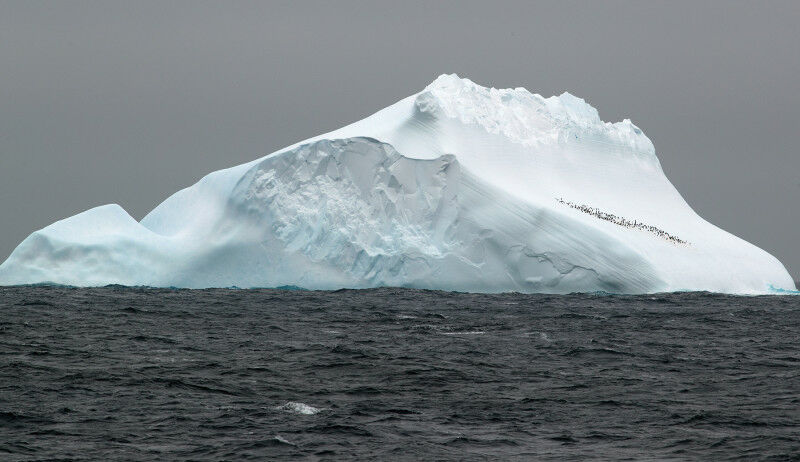
Iceberg in the Scotia Sea. Photo: Thomas Ronge
Iceberg in the Scotia Sea. Photo: Thomas Ronge - Can iron-rich dust fertilize the ocean, stimulate algae growth there, and thereby capture carbon dioxide from the atmosphere? An international research team involving the University of Bern and led by the University of Bonn used deep-sea sediment cores from the Scotia Sea to investigate whether this hypothetical greenhouse gas sink had an effect during ice ages. Although dust input was high during ice ages, no evidence of a fertilization effect could be found in the Antarctic Ocean. Changes in the concentration of atmospheric carbon dioxide (CO2) are considered to be the main cause of past and future climate change. A long-standing debate centers on whether the roughly 30 percent lower CO2 content of the ice-age atmosphere was caused by iron fertilization. It is argued that iron-rich dust is carried into the ocean by wind and water, where it stimulates the growth of algae that absorb more CO2. As the algae die and then sink permanently into the depths of the ocean, the CO2 also remains there like in a trap.
TO READ THIS ARTICLE, CREATE YOUR ACCOUNT
And extend your reading, free of charge and with no commitment.