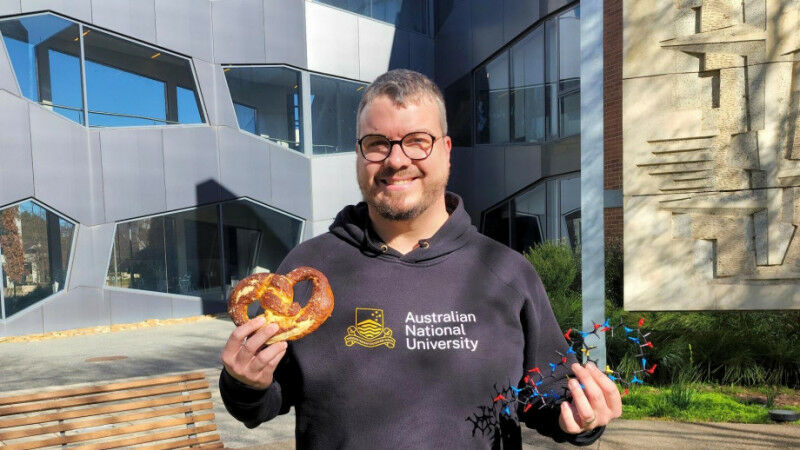
Dr Christoph Nitsche. Photo: supplied
Dr Christoph Nitsche. Photo: supplied - Researchers from The Australian National University (ANU) have developed a new way to synthesise bicyclic peptides, with major implications for future research into drug treatments for a range of diseases including cancer, viruses and bacterial infections. Bicyclic peptides are pretzel-shaped chains made of amino acid building blocks. This pretzel shape allows them to attach to specific proteins, similar to antibodies, giving them immense potential for use in targeted pharmaceutical treatments. However, a major roadblock in the development of pharmaceuticals from bicyclic peptides is looping them and getting them to bond in just the right locations to form the desired pretzel shape. Led by Dr Christoph Nitsche at the ANU, the new method developed by the team of researchers has overcome this challenge. "Unlike previous methods, we have been able to take a natural peptide sequence and add the three amino acid building blocks on the peptide where we want the bonds to form in water, meaning we can now control the final product," said Dr Nitsche.
TO READ THIS ARTICLE, CREATE YOUR ACCOUNT
And extend your reading, free of charge and with no commitment.