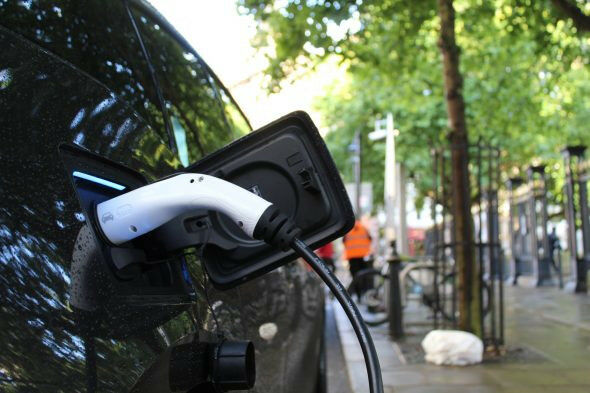
Photo by Andrew Roberts on Unsplash
Photo by Andrew Roberts on Unsplash Engineers at the University of Illinois Chicago are among a collaborative team that has developed a material that could give fuel cell systems a competitive edge over the battery systems that currently power most electric vehicles. In contrast to lithium batteries, fuel cell technology relies on catalyst-driven chemical reactions to create energy. Lithium batteries can typically achieve a range of 100'300 miles on one charge, but they also are vulnerable to the high cost of cathode materials and manufacturing and require several hours to charge. Alternatively, fuel cell systems take advantage of abundant elements such as oxygen and hydrogen and can achieve more than 400 miles on a single charge - which can be done in under five minutes. Unfortunately, the catalysts used to power their reactions are made of materials that are either too expensive (i.e., platinum) or too quickly degraded to be practical. Until now, that is. With the development of the new additive material, scientists can make an inexpensive iron-nitrogen-carbon fuel cell catalyst more durable.
TO READ THIS ARTICLE, CREATE YOUR ACCOUNT
And extend your reading, free of charge and with no commitment.