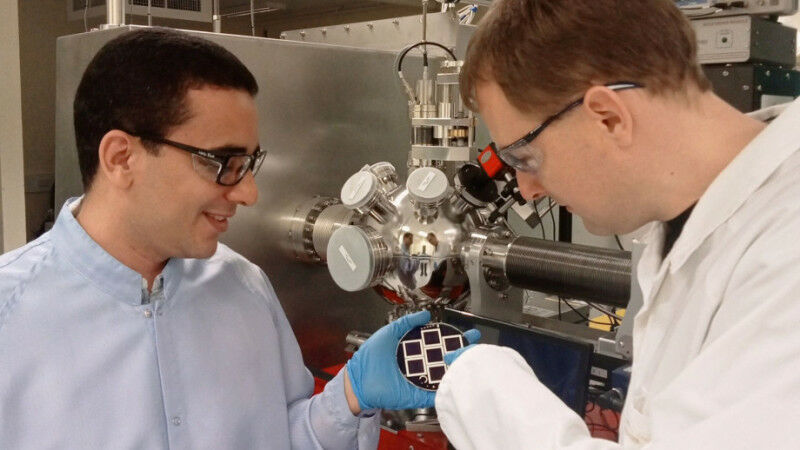
PhD candidate Mohamed Ismael (left) and Dr Lachlan Black. Image: Supplied.
PhD candidate Mohamed Ismael ( left ) and Dr Lachlan Black. Image: Supplied. An increase in the efficiency of solar panels may be on the horizon, as research from The Australian National University (ANU) reduces their current limitations. ANU researchers have found a way to improve the performance of silicon photovoltaic (PV) or solar cells. This is done through the addition of "passivating contacts" between the metal and silicon parts of the solar cell, making it more productive. "These findings will help push the performance of silicon solar cells closer to their theoretical limit," Mohamed Ismael, lead ANU researcher and PhD candidate said. "Each day, the sun produces significantly more energy than needed to power the whole planet. The only limitation is our ability to economically convert it to electricity," he said. Solar cells are devices that convert light energy in the form of photons into electrical energy.
TO READ THIS ARTICLE, CREATE YOUR ACCOUNT
And extend your reading, free of charge and with no commitment.