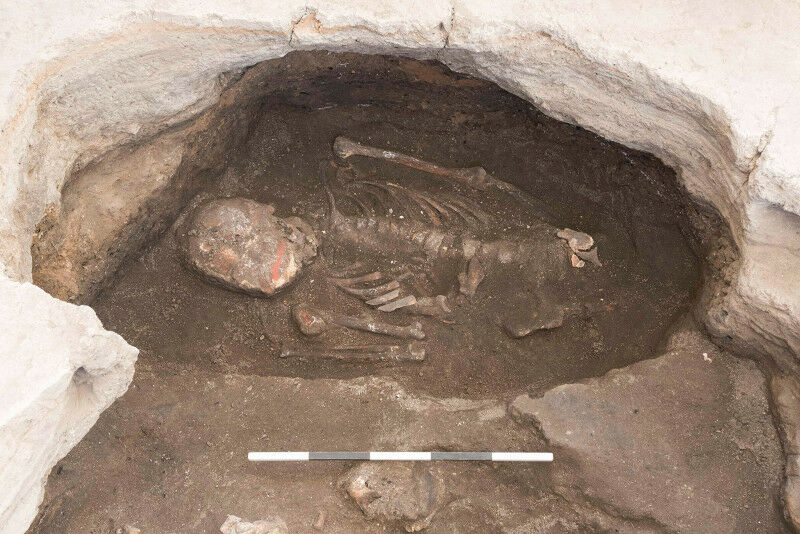
 Skeleton of a male individual aged between 35 and 50 years old with cinnabar painting on the cranium.
Skeleton of a male individual aged between 35 and 50 years old with cinnabar painting on the cranium. Marco Milella An international team with participation of the University of Bern provides new insights about how the inhabitants of the "oldest city in the world" in Éatalhöyük (Turkey) buried their dead. Their bones were partially painted, excavated several times and reburied. The findings provide insight into the burial rituals of a fascinating society that lived 9000 years ago. Çatalhöyük (Central Anatolia, Turkey) is one of the most important archaeological sites in the Near East, with an occupation that dates back to 9000 years ago. This Neolithic settlement, known as the world's oldest city, covers an area of 13-ha and features densely aggregated mudbrick buildings. The houses of Çatalhöyük present the archaeological traces of ritual activities including intramural burials with some skeletons bearing traces of colorants, and wall paintings.
TO READ THIS ARTICLE, CREATE YOUR ACCOUNT
And extend your reading, free of charge and with no commitment.
Your Benefits
- Access to all content
- Receive newsmails for news and jobs
- Post ads