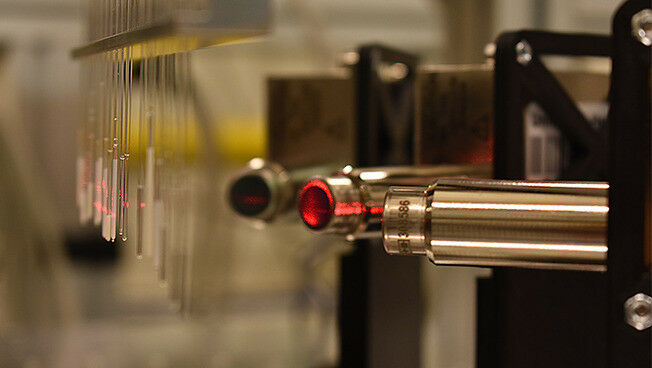
Photo: XX Capillaries used by the Universität Hamburg team to measure whether the marked Q10 moved back out of the cells.
Photo: XX Capillaries used by the Universität Hamburg team to measure whether the marked Q10 moved back out of the cells. Promising methods of measurement should provide data and insights for combating chronic illnesses and cancer. Universität Hamburg team measures the uptake of co-enzymes by individual cells Within the framework of a contract to conduct research into human skin cells, a research team at Universität Hamburg, together with the Frauenhofer Institute for Applied Polymer Research (IAP), DESY, and the Beiersdorf corporation, measured how much co-enzyme Q10 cells had taken up. This research method has the potential to also be applied to medications and treatments for cancers, liver inflammation, and kidney diseases. The high resolution offered by the x-ray fluorescence method makes it possible to measure the distribution of molecules, such as co-enzymes, inside individual cells. To do this however, the molecule must be marked, but marked in such a way that does not alter its behavior. For the study, released in the -Antioxidants- journal, the team around experimental physicist Florian Grüner examined Q10 molecules that had been marked with iodine atoms which would fluoresce after being exposed to x-rays (x-ray echo).
TO READ THIS ARTICLE, CREATE YOUR ACCOUNT
And extend your reading, free of charge and with no commitment.