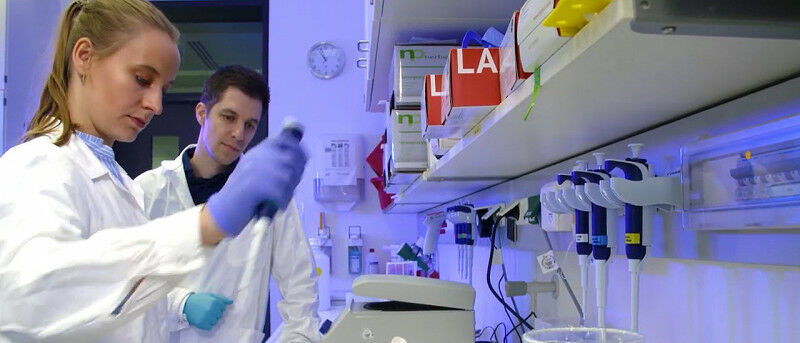
A HIRI-team headed by research group leader Mathias Munschauer focused on the interactions between different SARS-CoV-2 RNAs and the proteins of the human host cell. (Image: HIRI / Lucky Panda Studios)
A HIRI-team headed by research group leader Mathias Munschauer focused on the interactions between different SARS-CoV-2 RNAs and the proteins of the human host cell. (Image: HIRI / Lucky Panda Studios) How SARS-CoV-2 initiates its replication process during infection is not yet fully understood. Researchers from the Helmholtz Institute Würzburg have now published unexpected findings. SARS-CoV-2, the virus responsible for the disease COVID-19 with nearly seven million deaths worldwide to date, has a characteristic genetic makeup made entirely of ribonucleic acid (RNA). This RNA contains instructions for creating new copies of the virus. When SARS-CoV-2 infects a host cell, it takes over the cell's gene expression machinery to copy and reproduce itself. This involves creating various types of viral RNA, each with a specific role in the replication cycle of the virus.
TO READ THIS ARTICLE, CREATE YOUR ACCOUNT
And extend your reading, free of charge and with no commitment.