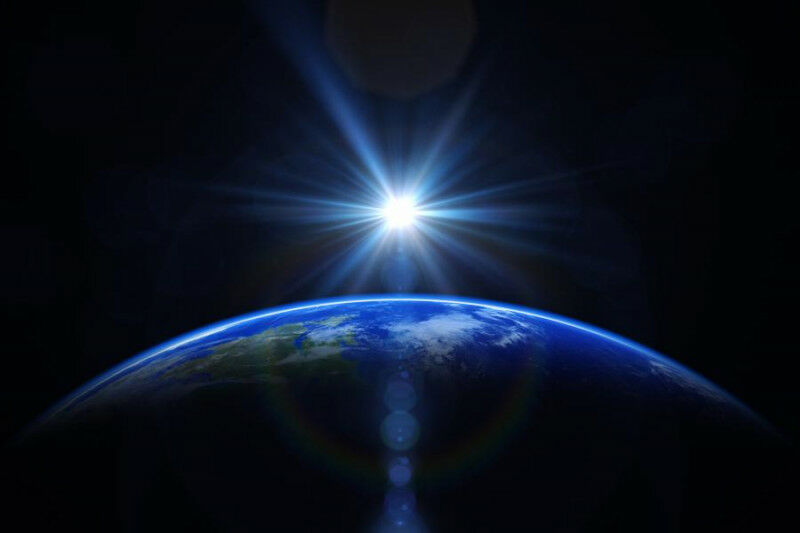
The sun’s light shows the curvature of the Earth, as seen from space
In early Earth simulation co-led by researchers at Johns Hopkins, scientists gain insights into how amino acids shaped the genetic code of ancient microorganisms. The sun's light shows the curvature of the Earth, as seen from space By simulating early Earth conditions in the lab, researchers have found that without specific amino acids, ancient proteins would not have known how to evolve into everything alive on the planet today-including plants, animals, and humans. The findings, which detail how amino acids shaped the genetic code of ancient microorganisms, shed light on the mystery of how life began on Earth. "You see the same amino acids in every organism, from humans to bacteria to archaea, and that's because all things on Earth are connected through this tree of life that has an origin, an organism that was the ancestor to all living things," said Stephen Fried , a Johns Hopkins chemist who co-led the research with scientists at Charles University in the Czech Republic. "We're describing the events that shaped why that ancestor got the amino acids that it did." "The universe seems to love amino acids. Maybe if we found life on a different planet, it wouldn't be that different." Stephen Fried The findings are newly published in the Journal of the American Chemical Society . In the lab, the researchers mimicked primordial protein synthesis of 4 billion years ago by using an alternative set of amino acids that were highly abundant before life arose on Earth.
TO READ THIS ARTICLE, CREATE YOUR ACCOUNT
And extend your reading, free of charge and with no commitment.