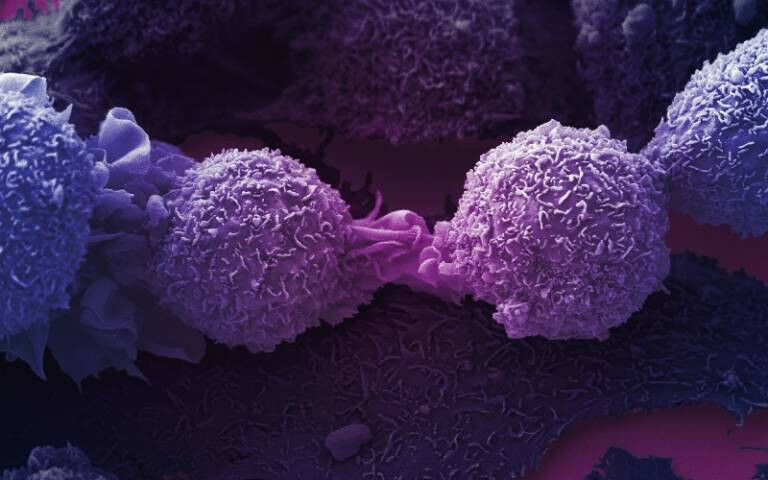
Lung cancer cells - Lung cancer cells. Credit: Anne Weston, Francis Crick Institute.
Lung cancer cells - Lung cancer cells. Credit: Anne Weston, Francis Crick Institute. Machine learning models to identify the simplest way to screen for lung cancer have been developed by researchers from UCL and the University of Cambridge, bringing personalised screening one step closer. The model was found to be as good or better at predicting an individual's risk of getting lung cancer within five years compared to the best risk models available, and was able to do so using just a quarter of the information needed. The findings are published in PLOS Medicine . Lung cancer is the most common cause of cancer death worldwide, with poor survival in the absence of early detection. It is estimated that there were 1.8 million lung cancer deaths globally in 2020.
TO READ THIS ARTICLE, CREATE YOUR ACCOUNT
And extend your reading, free of charge and with no commitment.