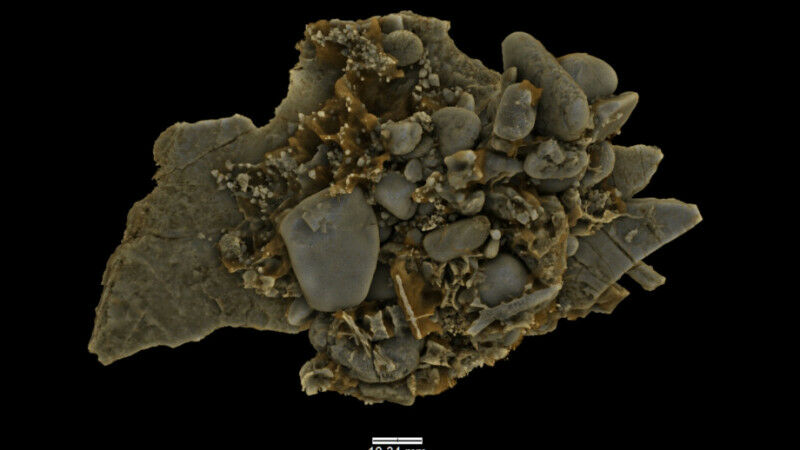
A 3D model showing evidence of gastroliths, also known as stomach stones, found inside Eric the plesiosaur’s fossilised stomach. Photo: Joshua White/ANU
A 3D model showing evidence of gastroliths, also known as stomach stones, found inside Eric the plesiosaur's fossilised stomach. Photo: Joshua White/ANU We now know more about the diet of a prehistoric creature that grew up to two and a half metres long and lived in Australian waters during the time of the dinosaurs, thanks to the power of X-rays and a team of scientists at The Australian National University (ANU) and the Australian Museum Research Institute (AMRI). The researchers used micro-CT scans to peer inside the fossilised stomach remains of a small marine reptile - a plesiosaur nicknamed 'Eric' after a song from the comedy group Monty Python - to determine what the creature ate in the lead up to its death. The researchers were able to find 17 previously undescribed fish vertebrae inside Eric's gut, confirming the plesiosaur's diet consisted mostly of fish - reinforcing findings from previous studies conducted in 2006. The findings could help scientists learn more about the evolutionary history of extinct organisms such as Eric, as well as help predict what the future might look like for our marine life. According to the researchers, the study demonstrates the potential to use X-rays to reconstruct the diets of other extinct organisms that inhabited Earth hundreds of millions of years ago. "Previous studies examined the exterior surface of Eric's opalised skeleton to find clues," PhD researcher Joshua White, from the ANU Research School of Physics and the AMRI, said.
TO READ THIS ARTICLE, CREATE YOUR ACCOUNT
And extend your reading, free of charge and with no commitment.