The TU Ilmenau is developing a method for robotic surgery that will enable much more effective treatment of malignant cancer tumours
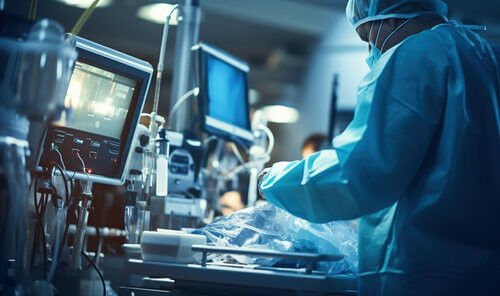
The TU Ilmenau is developing a method for robotic surgery that will enable much more effective treatment of malignant cancer tumours - In a large-scale research project, the Technische Universität Ilmenau is developing a method for robotic surgery that will enable much more effective treatment of malignant cancerous tumors. With a combination of highly sensitive sensor technology, modern imaging and artificial intelligence, the surgeon can perform the operation more precisely and with less tissue damage than ever before - significantly improving the patient's chances of recovery. The joint research project "Sensorized Surgery" is being funded by the Carl Zeiss Foundation with five million euros over the next six years, of which the TU Ilmenau will receive 800,000 euros. In order to be able to decide how the robot should make the incisions during an operation in precision surgery, the surgeon must also be able to recognize the boundaries of the tumours with comparable precision. Surgical robots such as the avatera system developed by industry in Ilmenau achieve an accuracy of up to 0.1 millimetres when cutting body tissue - but only theoretically in cancer surgery: the white light image-based video endoscopy currently used to detect the tumor boundary is so imprecise that in up to 30 percent of cases the tumor is not completely removed. The result: poorer chances of recovery and survival rates for patients. The "Sensorized Surgery" research project led by Jena University Hospital aims to use a combination of biophotonically measuring and haptically "feeling" sensors, modern imaging and artificial intelligence to perform cancer surgery that promises patients better chances of recovery and at the same time simplifies the work of doctors.
TO READ THIS ARTICLE, CREATE YOUR ACCOUNT
And extend your reading, free of charge and with no commitment.