1/3 images 1 of 3 images or videos
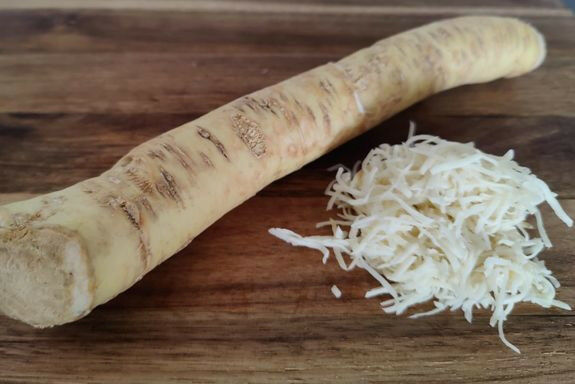
1/3 images 1 of 3 images or videos At the Vienna University of Technology, a breakthrough was achieved in the production of important enzymes: Previously, they were extracted from horseradish roots (horseradish), but now a precise, clean, synthetic production was achieved in the laboratory . It is one of the most important enzymes in medical diagnostics: The so-called - Horseradish Peroxidase- (Horseradish Peroxidase) is used for many medical devices - often it is used when a color change of a test strip is to detect the presence of antibodies or other proteins. Just recently, however, there is always a shortage of horseradish peroxidase. This is because it is currently extracted from horseradish roots, and this has major disadvantages: The agricultural yield is not always the same, the roots produce not just one version of the enzyme, but a whole family of similar enzymes, and in varying amounts. For this reason, an attempt was made at the Vienna University of Technology to develop a reliable, precise synthesis method in the laboratory. After years of research, they have now succeeded: The production of horseradish peroxidase is now possible with the help of E. coli bacteria . In this process, a very specific enzyme is produced in a precisely reproducible manner, and the process can be scaled up to large-scale industrial production.
TO READ THIS ARTICLE, CREATE YOUR ACCOUNT
And extend your reading, free of charge and with no commitment.