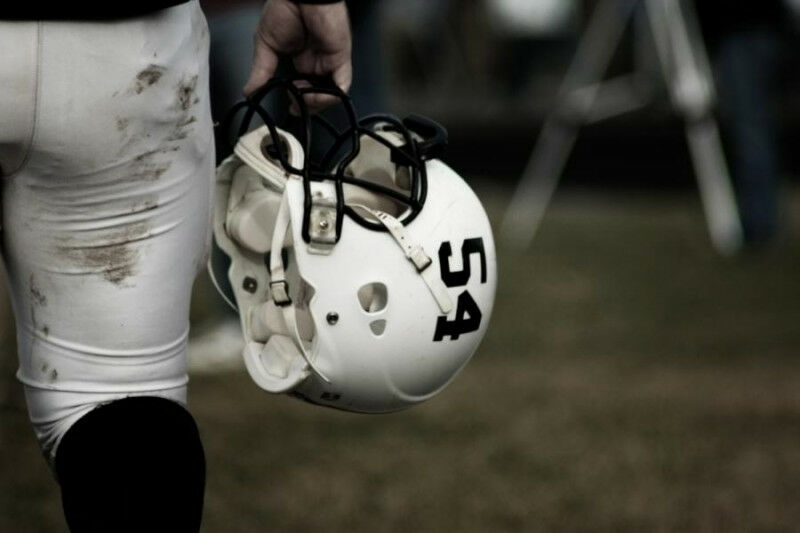
Football player holding a helmet on the sidelines
Football player holding a helmet on the sidelines Brain scans of former NFL players show lasting impact of collision sports New research from Johns Hopkins Medicine adds to a growing stack of evidence that collision sports including football, soccer, and boxing may lead to dementia and other forms of cognitive disorders. Kristen Crocker / Published Nov 29, 2023 In a new study using brain scans of former NFL athletes, Johns Hopkins Medicine researchers say they found high levels of a repair protein present long after a traumatic brain injury such as a concussion takes place. The repair protein, known as 18 kDa translocator protein (TSPO), is known to be present in the brain at high levels in the immediate aftermath of brain injury as part of the inflammatory response and to facilitate repair. The new findings, published Oct. 30 in JAMA Network Open , suggest that brain injury and repair processes persist for years after players end collision sports careers, and lead to long-term cognitive problems such as memory loss. "The findings show that participating in repeated collision sports like football may have a direct link to long-term inflammation in the brain," says Jennifer Coughlin , associate professor of psychiatry and behavioral sciences at the Johns Hopkins University School of Medicine. Ongoing studies like the current one, she says, add details about how the brain heals-or doesn't'and how repeated brain injuries, even mild ones that players routinely shake off, may over time affect cognitive abilities.
TO READ THIS ARTICLE, CREATE YOUR ACCOUNT
And extend your reading, free of charge and with no commitment.