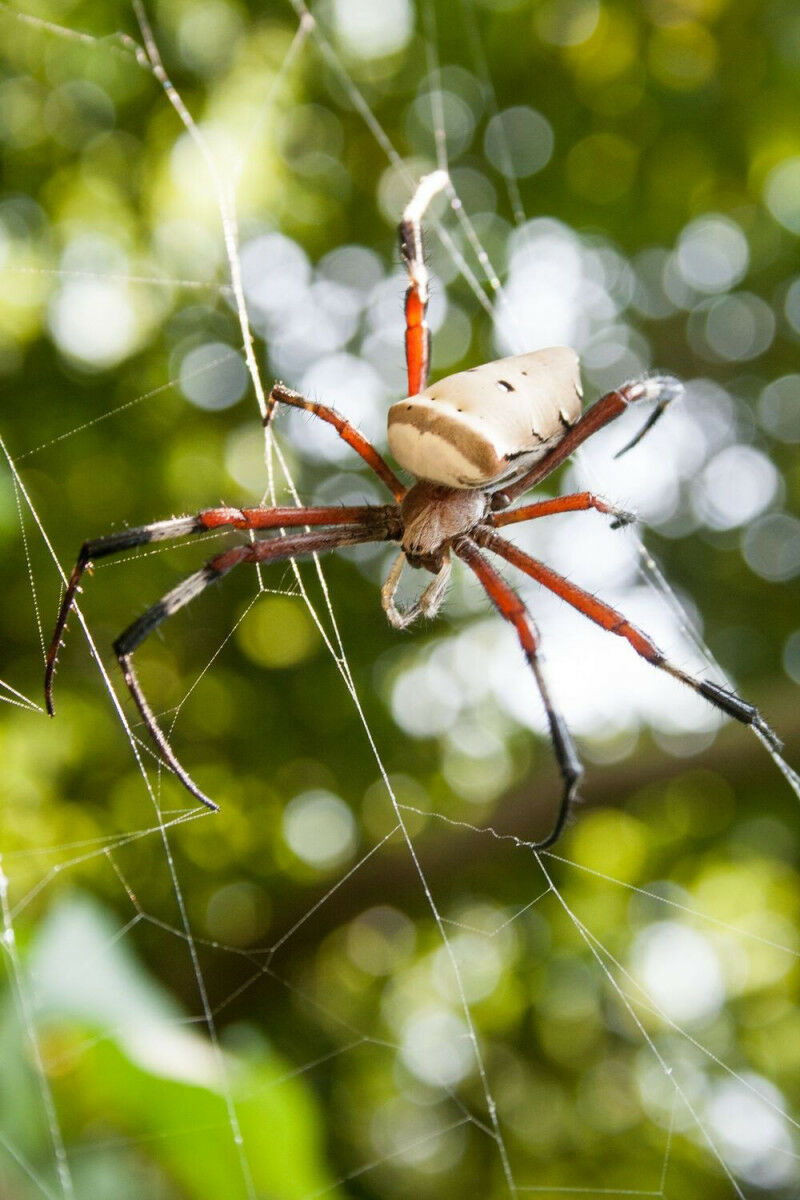
A web-spinning spider: one of the hunter arthropods of the forest Photo: Andreas Schuldt
A web-spinning spider: one of the hunter arthropods of the forest Photo: Andreas Schuldt Researchers including Göttingen University find first evidence of significance of arthropod diversity Forests are home to 80% of the world's plant and animal diversity and are vital for global conservation. However, biodiversity in forests is under serious threat from human activity and climate change. An international research team including the University of Göttingen has now revealed that forests with higher tree species richness tend to also have a greater diversity of spiders, millipedes, insects and other arthropods. In addition, the study shows that these animals play an important role in how tree diversity promotes forest productivity, because plant-eating arthropods are more effectively suppressed by other arthropods in forests with more tree species. The results were published in Nature Ecology & Evolution. Butterfly larvae munching on leaves: these are common plant-eaters in the forest Photo: Andreas Schuldt - The researchers collected and analysed five years of data about arthropods living on trees, together with information about tree growth, in a large forest experiment in southeast China. They divided the arthropods into plant-eaters, hunters and parasitoids (creatures whose larvae live inside a host usually killing it).
TO READ THIS ARTICLE, CREATE YOUR ACCOUNT
And extend your reading, free of charge and with no commitment.