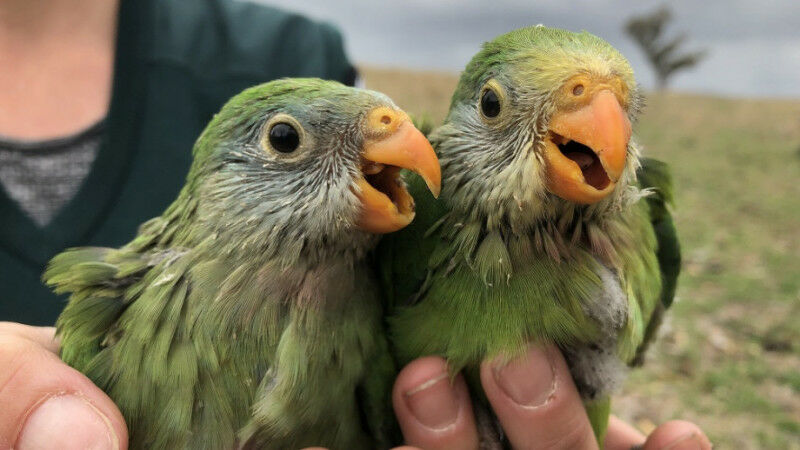
Photo: Difficult Bird Research Group
Photo: Difficult Bird Research Group Just half a per cent of the available tree hollows in Canberra's woodlands are suitable nests for superb parrots. A new study by researchers at The Australian National University (ANU) and the ACT Government has found the search for a suitable nesting site can have a big impact on how many offspring the superb parrots are able to produce. Superb parrots are a listed vulnerable species with a small resident population in Canberra. Previously ANU researchers have shown that these sleek green birds depend on tree hollows for nesting, but that their preferred nest sites are extremely rare. This prompted lead researcher Dr Dejan Stojanovic and his co-authors to ask whether pairs of parrots that monopolise nesting sites have an advantage when it comes to breeding success. The study, published in Animal Conservation , shows that breeding pairs of superb parrots that successfully defended a suitable nesting site over multiple years produce more than double the offspring of unsuccessful pairs. "Breeding pairs that can secure access to a good quality nest over time dominated the breeding output of Canberra," Dr Stojanovic said.
TO READ THIS ARTICLE, CREATE YOUR ACCOUNT
And extend your reading, free of charge and with no commitment.