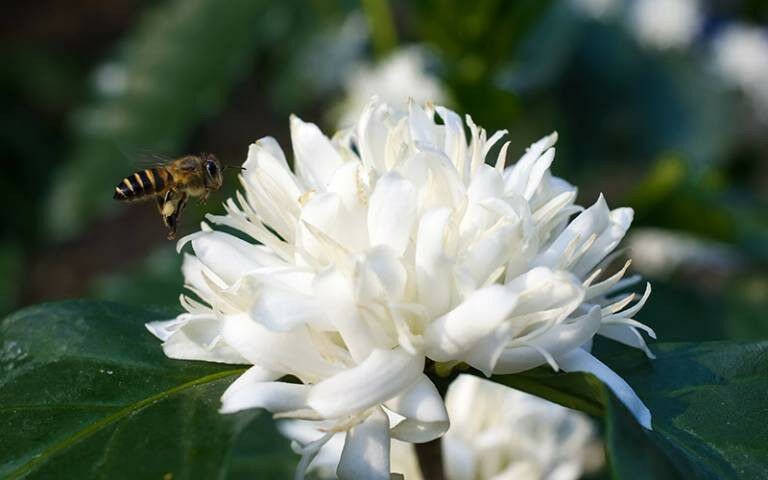
Bee and coffee plant flower - iStock
Bee and coffee plant flower - iStock Tropical crops such as coffee, cocoa, watermelon and mango may be at risk due to the loss of insect pollinators, finds a new study led by UCL and Natural History Museum researchers. Published in Science Advances , the study explores the intricate interplay between climate change, land use change, and their impact on pollinator biodiversity, ultimately revealing significant implications for global crop pollination. The study, which compiled data from 1,507 crop growing sites around the world and catalogued 3,080 insect pollinator species, exposes a concerning trend - the combined pressures of climate change and agricultural activities have led to substantial declines in both the abundance and richness of insect pollinators. Crops which depend on pollination by animals to some degree make up around 75% of crops. The model created by the research team looked at which pollination dependent crops were most at threat all the way up to 2050 in the hope of providing a warning to both the agricultural and conservation communities. Lead author Dr Joe Millard, who completed the study as part of his PhD at the UCL Centre for Biodiversity & Environment Research, before moving to the Natural History Museum London, said: "Our research indicates that the tropics are likely most at risk when it comes to crop production from pollinator losses, primarily due to the interaction of climate change and land use.
TO READ THIS ARTICLE, CREATE YOUR ACCOUNT
And extend your reading, free of charge and with no commitment.