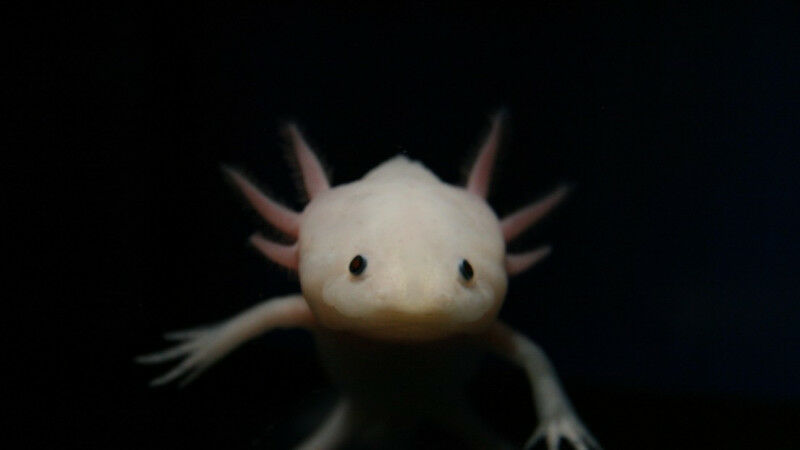
 An axolotl © Tatiana Sandoval-Guzmán
An axolotl © Tatiana Sandoval-Guzmán (Université technique de Dresde) Researchers shed light on the axolotl's unparalleled limb regeneration abilities, challenging long-held beliefs and offering new insights into potential mammalian limb regrowth. In the serene waters of Mexico, the axolotl - a type of salamander - has long fascinated scientists with its remarkable ability to regrow lost limbs. This intriguing capability has made it a focal point for researchers trying to unlock the secrets of limb regeneration. Nonetheless, the regenerative ability of the axolotl has proven elusive, generating no small amount of controversy. The key player is a structure known as the "apical-ectodermal-ridge" (AER), which plays a pivotal role in the development of limbs in vertebrates. In the developing embryo, the AER forms out of the so-called limb bud, and becomes the main signaling center that organizes and ensures that the new organism's limbs will grow properly. Without an AER, no limb should be formed.
TO READ THIS ARTICLE, CREATE YOUR ACCOUNT
And extend your reading, free of charge and with no commitment.
Your Benefits
- Access to all content
- Receive newsmails for news and jobs
- Post ads