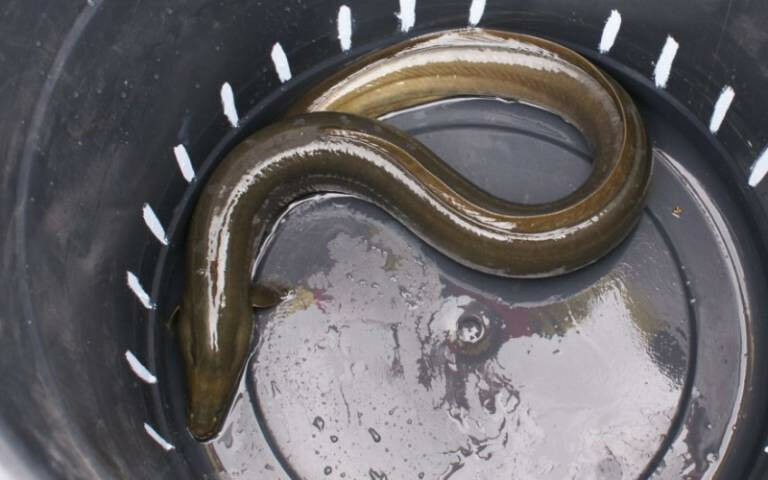
An eel in a bucket
An eel in a bucket - Evidence of the widespread, and likely illegal, trading of critically endangered European eels has been uncovered using DNA testing carried out by researchers at UCL and the University of Exeter. The research team carried out "DNA barcoding" on products including jellied eels and unagi, which is used in sushi and donburi. With European eel populations at about 5-10% of their former levels, the EU has banned the import and export of European eels. This has sparked a highly lucrative illegal trade - with media reports of a "multi-billion pound eel mafia". In June 2022, European authorities announced the arrest of 49 people involved in a trafficking network that moved live eels in suitcases. For the paper published in Food Control , the researchers analysed 114 samples and combined their results with existing published research, finding European eels - and endangered American and Japanese eels - on sale in the UK, continental Europe, North America and Asia. Senior author Dr Andrew Griffiths (University of Exeter) said: "The growing popularity of Japanese cuisine worldwide has caused an increasing demand for freshwater eels.
TO READ THIS ARTICLE, CREATE YOUR ACCOUNT
And extend your reading, free of charge and with no commitment.