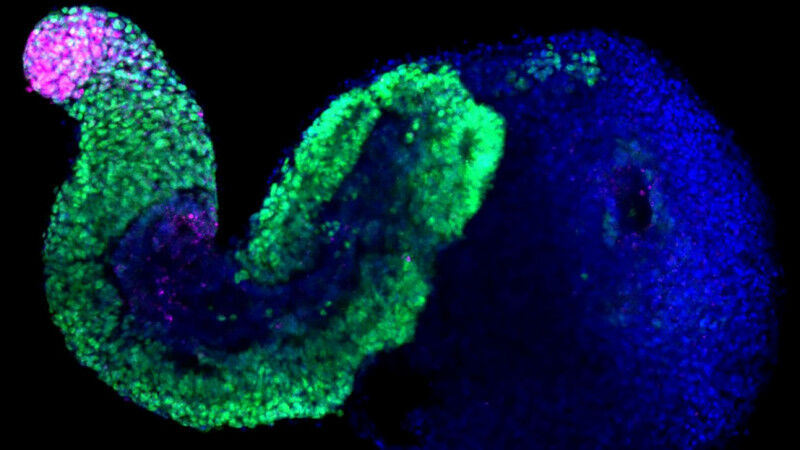
© Mehmet Girgin, EPFL Researchers from EPFL and the University of Geneva (UNIGE) have gained new insights into a mechanism regulating the early-stage development of mouse embryos. Instead of using an animal model, the team carried out their research on pseudo-embryos grown in the lab from stem cells. Cold cases aren't just the preserve of criminology. In science, too, there are unsolved mysteries locked away in a draw awaiting new evidence. And just as the advent of DNA fingerprinting has helped crack old criminal cases, so new cell models are giving scientists the tools to revisit research questions that couldn't be answered with animal models alone. Prof. Denis Duboule - who runs EPFL's Laboratory of Developmental Genomics and is also a professor at The Collège France, in Paris - knows a thing or two about this subject. For over 30 years, he's studied the mouse genome in a quest to understand the fundamental mechanisms regulating mammal development.
TO READ THIS ARTICLE, CREATE YOUR ACCOUNT
And extend your reading, free of charge and with no commitment.
Your Benefits
- Access to all content
- Receive newsmails for news and jobs
- Post ads


