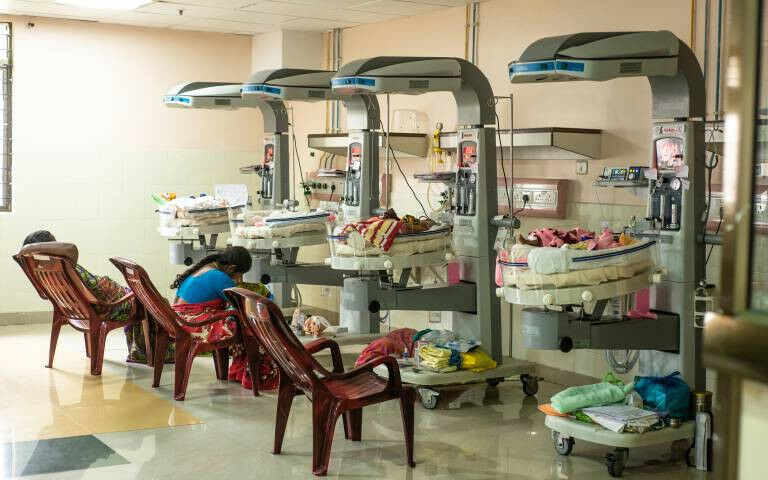
Image taken of a ward with babies at the Jawaharlal Institute of Postgraduate Medical Education & Research in Puducherry, India.
Image taken of a ward with babies at the Jawaharlal Institute of Postgraduate Medical Education & Research in Puducherry, India. A global observational study co-led by UCL, which involved more than 3,200 newborn babies suffering from sepsis in 19 hospitals in 11 countries, has shown that many newborns are dying because the antibiotics used to treat sepsis are losing their effectiveness. The study, conducted from 2018 to 2020, found there was high mortality among infants with culture-positive* sepsis (almost 1 in 5 across the hospital sites), and a significant burden of antibiotic resistance. The study has provided a wealth of high-quality data aimed at improving the treatment of newborn babies with sepsis. The findings of the observational study have been published in a paper in PLOS Medicine co-authored by a global team of over 80 researchers spanning four continents. The study was conducted by the Global Antibiotic Research and Development Partnership (GARDP) in collaboration with the Medical Research Council Clinical Trials Unit at UCL, whose research team led in analysing the data; St George's, University of London (SGUL); Penta - Child Health Research; and the University of Antwerp. The study aims to inform WHO guidelines on treatment for newborn babies with sepsis.
TO READ THIS ARTICLE, CREATE YOUR ACCOUNT
And extend your reading, free of charge and with no commitment.