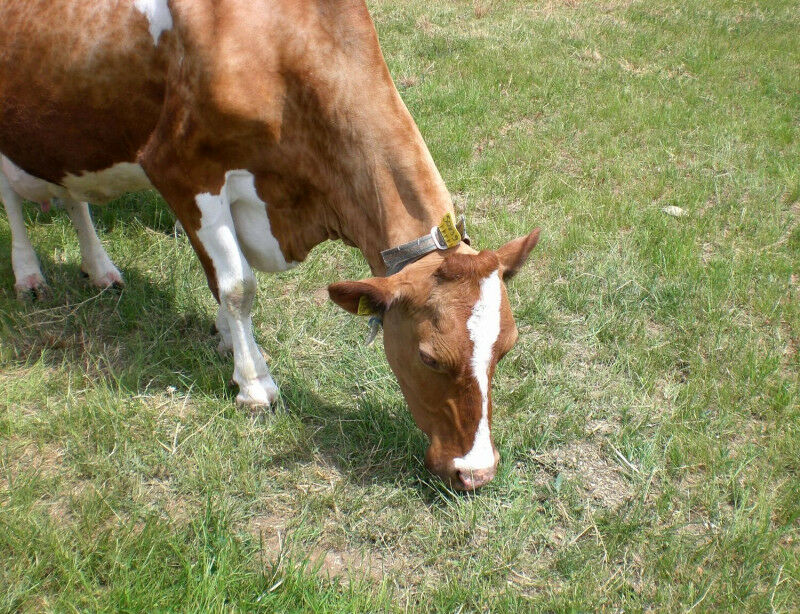
Although cows ingest plenty of sand and other bits of grit with their grass, their teeth are protected from being ground-down thanks to the way their first stomach ’washes’ their cud before they re-chew it. Photo: Jürgen Hummel
Although cows ingest plenty of sand and other bits of grit with their grass, their teeth are protected from being ground-down thanks to the way their first stomach 'washes' their cud before they re-chew it. Photo: Jürgen Hummel Research team including Göttingen University explains tooth abrasion in cows Ruminants like cows have developed an unusual way of digesting their food: they ingest plants, give them a rough chewing and then swallow the half-chewed mash before regurgitating it repeatedly and continuing to chew. This has clear advantages, as a research team including the University of Göttingen has shown: the regurgitated mushy food contains much less hard grit, sand and dust than the food that they first ingested. This protects the teeth from being ground down during the chewing process. This may explain why the crowns of the teeth of ruminants are less pronounced than those of other herbivores. The findings have been published in the journal Proceedings of the National Academy of Science (PNAS). The researchers fed four cows grass feed mixed with sand for several days and took samples of the regurgitated food pulp and faeces.
TO READ THIS ARTICLE, CREATE YOUR ACCOUNT
And extend your reading, free of charge and with no commitment.