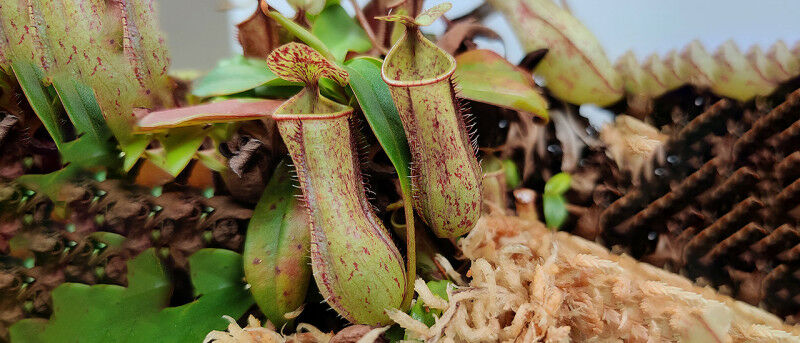
Pitcher plants like Nephentes gracilis use their specialized leaves to capture insects. This food supplement allows the plants to thrive even in nutrient-poor habitats. (Image: Kenji Fukushima / Uni Würzburg)
Pitcher plants like Nephentes gracilis use their specialized leaves to capture insects. This food supplement allows the plants to thrive even in nutrient-poor habitats. (Image: Kenji Fukushima / Uni Würzburg) A new study by Würzburg botanist Kenji Fukushima shows the role of subgenome dominance for plants in the evolutionary development of special traits, such as a carnivorous lifestyle. In a recent study, a team led by Würzburg botanist Kenji Fukushima investigates the genomic structure of the carnivorous pitcher plant Nepenthes gracilis and shows how polyploidy - the phenomenon of having more than two sets of chromosomes in cells - contributes to evolutionary innovation. Fukushima heads a working group at the Chair of Botany I at Julius-Maximilians-Universität Würzburg (JMU). The results of the study have now been published in the journal Nature Plants . On the Trail of Subgenome Dominance.
TO READ THIS ARTICLE, CREATE YOUR ACCOUNT
And extend your reading, free of charge and with no commitment.