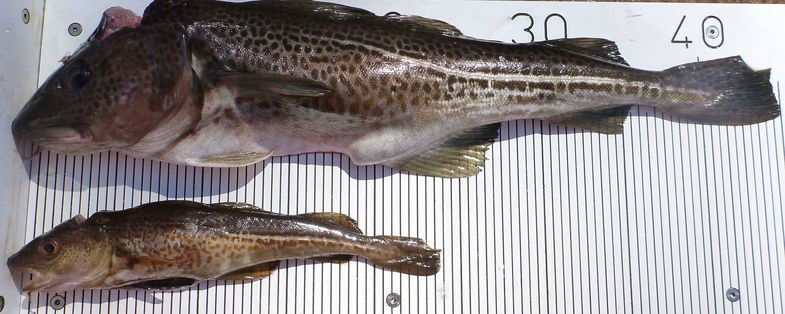
Two mature male Baltic cod of different body size. Growth rate, size and age at maturity have declined in several cod stocks owing to intense fishing in the past.Photo: Jan Dierking, GEOMAR Helmholtz Centre for Ocean...
Two mature male Baltic cod of different body size. Growth rate, size and age at maturity have declined in several cod stocks owing to intense fishing in the past. Photo: Jan Dierking, GEOMAR Helmholtz Centre for Ocean. News from Intense fishing and overexploitation have led to evolutionary changes in fish stocks like cod, reducing both their productivity and value on the market. These changes can be reversed by more sustainable and far-sighted fisheries management. The new study by researchers from the German Centre for Integrative Biodiversity Research (iDiv), Leipzig University and the Institute of Marine Research in Tromsø, which was published in Nature Sustainability, shows that reversal of evolutionary change would only slightly reduce the profit of fishing, but would help regain and conserve natural genetic diversity. The impact of global fisheries on marine ecosystems is severe: fish stocks have declined and the degradation of marine habitats as well as the loss of biodiversity have been accelerated.
TO READ THIS ARTICLE, CREATE YOUR ACCOUNT
And extend your reading, free of charge and with no commitment.