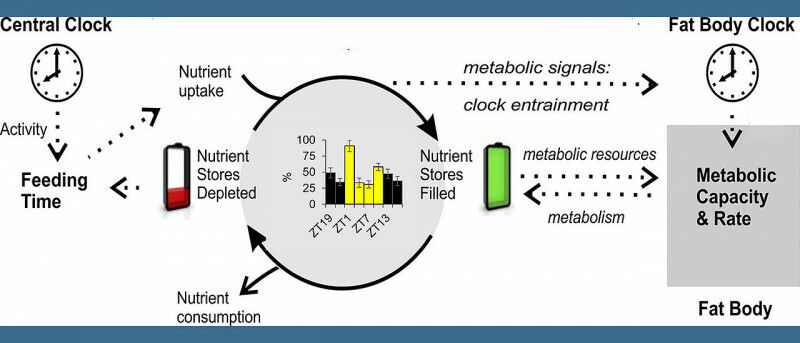
In the fruit fly Drosophila, a central circadian clock in the brain controls important parameters such as daily activity or food intake. Peripheral clocks receive timing signals via further pathways, and act as clocks for various metabolic processes. If the clocks chronically get out of sync, this can trigger diseases. (Image: Agnes Fekete)
In the fruit fly Drosophila, a central circadian clock in the brain controls important parameters such as daily activity or food intake. Peripheral clocks receive timing signals via further pathways, and act as clocks for various metabolic processes. If the clocks chronically get out of sync, this can trigger diseases. (Image: Agnes Fekete) In the fruit fly Drosophila, circadian clocks also control fat metabolism. This is shown in a new study by a research team at the University of Würzburg. The findings could also be relevant for humans. Much is known about how modern human lifestyles contribute to triggering metabolic disorders and diseases.
TO READ THIS ARTICLE, CREATE YOUR ACCOUNT
And extend your reading, free of charge and with no commitment.