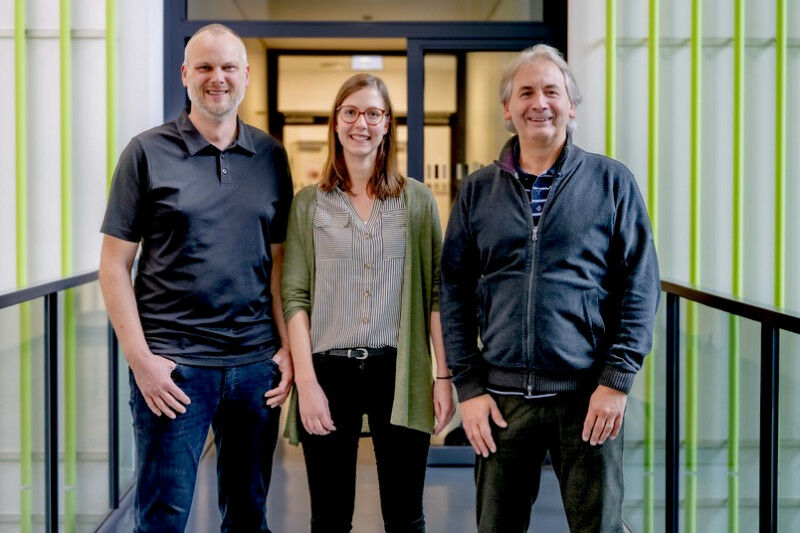
 Lars Schäfer, Claudia Brocks and Thomas Happe (from left) collaborated on the study.
Lars Schäfer, Claudia Brocks and Thomas Happe ( from left ) collaborated on the study. RUB, Marquard Selective genetic channel modifications can protect hydrogen-producing enzymes from harmful oxygen. There are high hopes for hydrogen as the key to the energy transition. A specific enzyme group found in algae and in bacteria can produce molecular hydrogen simply by catalyzing protons and electrons. However, the enzyme group is so sensitive to oxygen that commercial use of the hydrogen produced by this process as a green energy source is not yet possible. Researchers at the Cluster of Excellence RESOLV and the Research Training Group Microbial Substrate Conversion at Ruhr University Bochum increased the oxygen stability of a hydrogen-producing enzyme by genetically generated channel blockages. The researchers working with Professor Thomas Happe, head of the Photobiotechnology group, Professor Lars Schäfer, Professor Eckhard Hofmann and Professor Ulf-Peter Apfel published their findings in the journal ChemSusChem on 13.
TO READ THIS ARTICLE, CREATE YOUR ACCOUNT
And extend your reading, free of charge and with no commitment.
Your Benefits
- Access to all content
- Receive newsmails for news and jobs
- Post ads