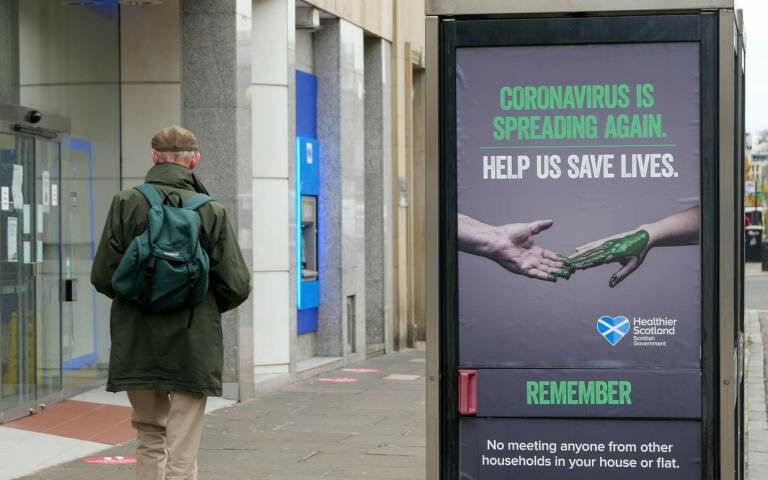
Coronavirus health warning poster on a Scottish high street. iStock
Coronavirus health warning poster on a Scottish high street. iStock Across Europe, depression and anxiety disorders became more common following the onset of the pandemic, reports a major review of evidence led by UCL researchers. Later in 2020, depression and anxiety rates reduced again, but fluctuated over the following year. The systematic review, published in The Lancet Psychiatry , pulls together evidence from 177 studies in 20 European countries to assess how the Covid-19 pandemic affected mental health across the continent for the first two years after lockdowns began. The researchers, led by a team at the NIHR Mental Health Policy Research Unit at UCL and King's College London, found that not only did people access mental health services less in the early stages of the pandemic as service provision was disrupted, but that service use in some areas still had not recovered two years later. Lead author Dr Nafiso Ahmed (UCL Psychiatry) said: "We found that the Covid-19 pandemic had a considerable effect on mental health across Europe, but overall, the impacts were not as substantial as many people had predicted early on, as we did not see a 'second pandemic' of mental health problems. "While there may not have been a major increase in mental health problems at the population level, for many individuals, the pandemic has had devastating consequences for their mental health.
TO READ THIS ARTICLE, CREATE YOUR ACCOUNT
And extend your reading, free of charge and with no commitment.