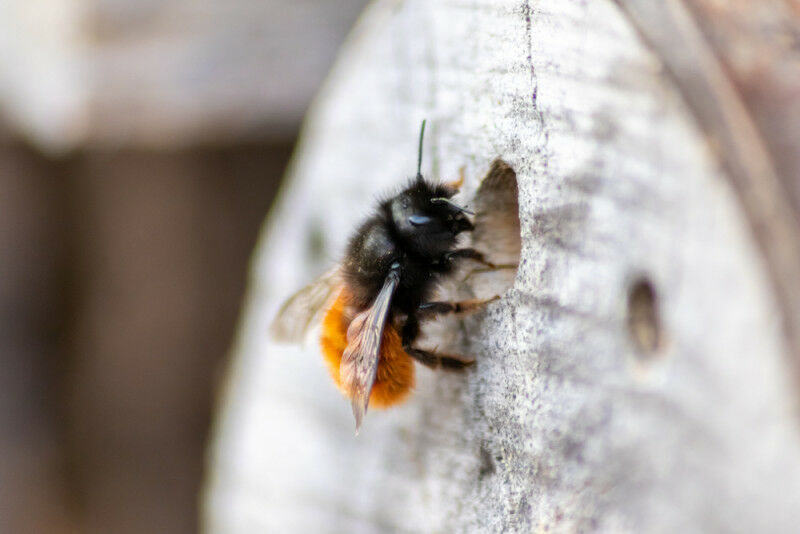
Horned mason bee (Photo: depositphotos)
Horned mason bee (Photo: depositphotos) How do solitary bees and wasps recognize their homes? Biologists Dr. Sylvie Vandenabeele and Professor Thomas Schmitt investigated this question. They were able to demonstrate the importance of olfactory markers. Not all bees and wasps live in colonies of several thousand individuals. The horned mason bee ( Osmia cornuta ), for example, nests solitarily. When choosing a nesting site, the females often use existing cavities ranging from abandoned nests of other bee species to wall cracks and artificial nesting aids such as insect hotels. Sylvie Vandenabeele has investigated how the bees distinguish their brood cavities from those of their conspecifics as nests are often in close proximity to each other. The biologist now works at the Chair of Zoology II at the Julius-Maximilians-Universität Würzburg (JMU).
TO READ THIS ARTICLE, CREATE YOUR ACCOUNT
And extend your reading, free of charge and with no commitment.