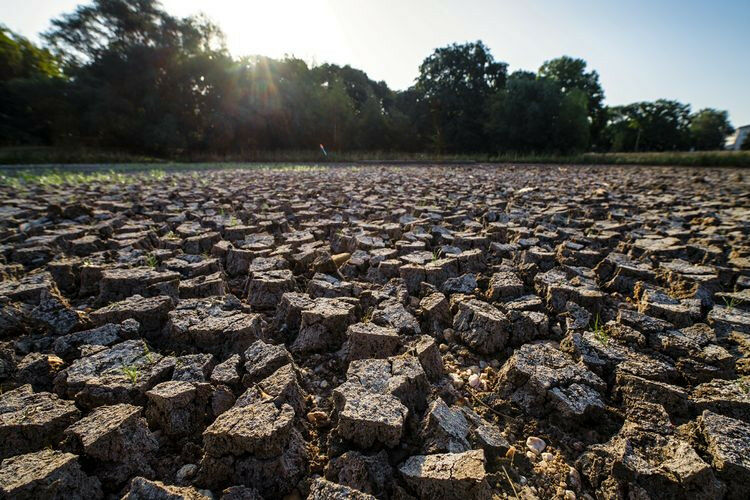
Climate change increases extreme heat in the soil. Photo: André Künzelmann (UFZ)
Climate change increases extreme heat in the soil. Photo: André Künzelmann (UFZ) - For a long time, little attention was paid to ground temperatures because, in contrast to air temperatures near the surface, hardly any reliable data were available due to the significantly more complex measurement. A research team led by the Helmholtz Centre for Environmental Research (UFZ) with the participation of the University of Leipzig has now found that not only can soil and air temperatures differ, but also that climate change has a much greater impact on the intensity and frequency of heat extremes in the soil than in the air. This is particularly the case in Central Europe, they write in the journal Nature Climate Change. The research team, coordinated by UFZ remote sensing scientist Dr. Almudena García-García, compiled data from a wide variety of sources for its study: data from meteorological measuring stations, from remote sensing satellites, from the ERA5-Land data analysis set, and from simulations of Earth system models. The researchers used this to feed the TX7d index - a commonly used index in science, defined as the average of the daily maximum temperature during the hottest week of the year. It reflects the intensity of heat extremes, i.e., how high extreme temperatures turn out to be.
TO READ THIS ARTICLE, CREATE YOUR ACCOUNT
And extend your reading, free of charge and with no commitment.