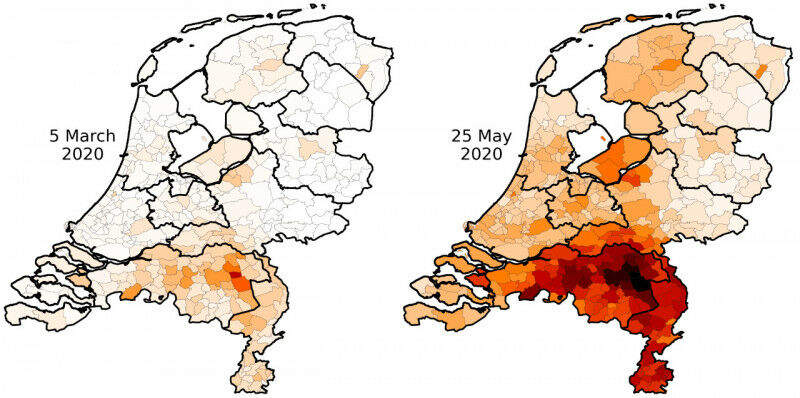
Visualisation of model simulation
Visualisation of model simulation Analysis of the COVID-19 pandemic in the Netherlands suggests that locally targeted pandemic control measures could have been just as effective as national lockdowns. Researchers from Utrecht University, Erasmus MC and the University of Amsterdam conclude this based on a mathematical model that they developed. As the model can also be applied to other countries and pathogens, the findings could be used to develop public health policies that effectively balance control measures to reduce infection spread, while lowering their socio-economic impact. The results of the model study are published today in the scientific journal eLife. Like in many countries, control of the first COVID-19 pandemic wave in the Netherlands was largely based on the nationwide implementation of measures such as lockdowns, social distancing and reduced mobility. The associated societal burden affected all areas of the country, while infections and the health-associated burden affected only some regions, for some of the time. Impact on people.
TO READ THIS ARTICLE, CREATE YOUR ACCOUNT
And extend your reading, free of charge and with no commitment.