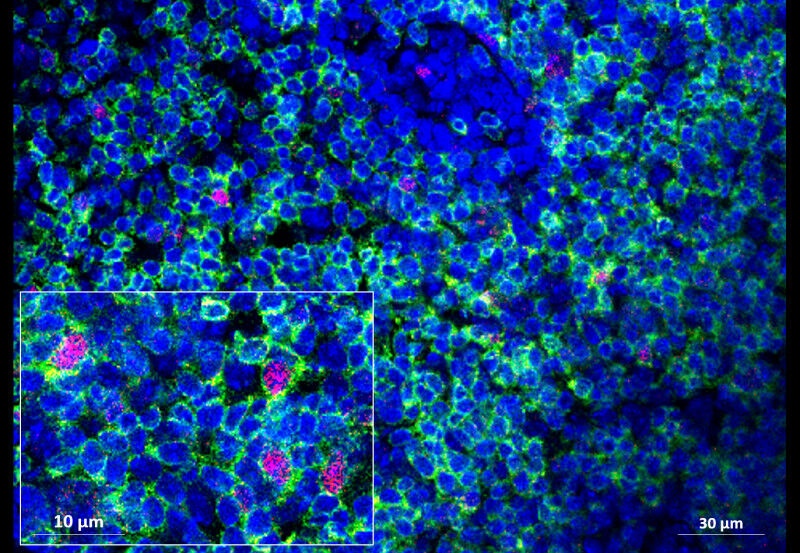
Visualization of immune cell (lymphocyte) proliferation in mesenteric lymph nodes under the influence of microbiota modulated by fatty diet. Soraya Taleb/PARCC
Visualization of immune cell (lymphocyte) proliferation in mesenteric lymph nodes under the influence of microbiota modulated by fatty diet. Soraya Taleb/PARCC - While a high-fat, low-fiber diet is known to promote cardiovascular diseases such as atherosclerosis, the mechanisms involved are not yet fully understood. Researchers at Inserm and Université Paris Cité have now turned their attention to the role of intestinal microbiota in the development of atherosclerosis. Their work in mice shows that the low fiber content of the fatty diet leads to an imbalance in the intestinal microbiota, which in turn causes systemic inflammation that aggravates the development of atherosclerotic plaques in the arteries. These results, published in Cell Reports , provide further evidence of the importance of fiber in the diet, both for healthy intestinal function and for preventing the onset of cardiovascular disease . Cardiovascular disease is one of the world's leading causes of death. Among these diseases, atherosclerosis is characterized by the deposition of an "atheromatous" plaque, essentially composed of lipids, on artery walls.
TO READ THIS ARTICLE, CREATE YOUR ACCOUNT
And extend your reading, free of charge and with no commitment.