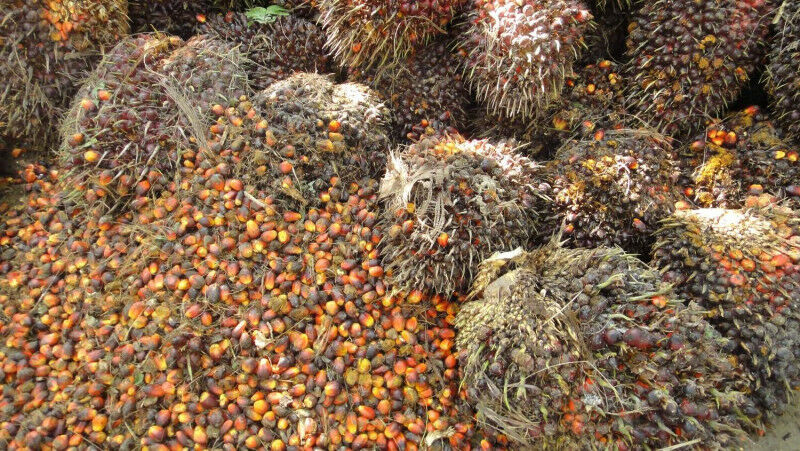
Harvested oil palm fruit bunches Photo: Oliver van Straaten
Harvested oil palm fruit bunches Photo: Oliver van Straaten Research led by Göttingen University compares reduced fertilizer and mechanical weeding with conventional management Oil palm trees are the most productive oil crop and global demand is increasing. However, their productivity is due to conventional management practices including high fertilizer usage and herbicide application, resulting in severe environmental damage. A new study by an international, multidisciplinary research team led by the University of Göttingen, shows that shifting to mechanical weeding and reducing fertilizer usage lead to significant increases in both ecosystem multifunctionality and profit. The scientists compared different environmental measures and economic indicators in mechanical weeding, herbicide application, and combinations of these with high and reduced fertilizer usage. Their study was published in the journal Nature Sustainability. Oil palm production has increased in Indonesia, currently the world's largest producer of palm oil, which coincides with the country's increased rate of deforestation. Although oil palm production has brought socio-economic benefits, it also causes environmental problems such as biodiversity loss, nitrate leaching and greenhouse gas emissions.
TO READ THIS ARTICLE, CREATE YOUR ACCOUNT
And extend your reading, free of charge and with no commitment.