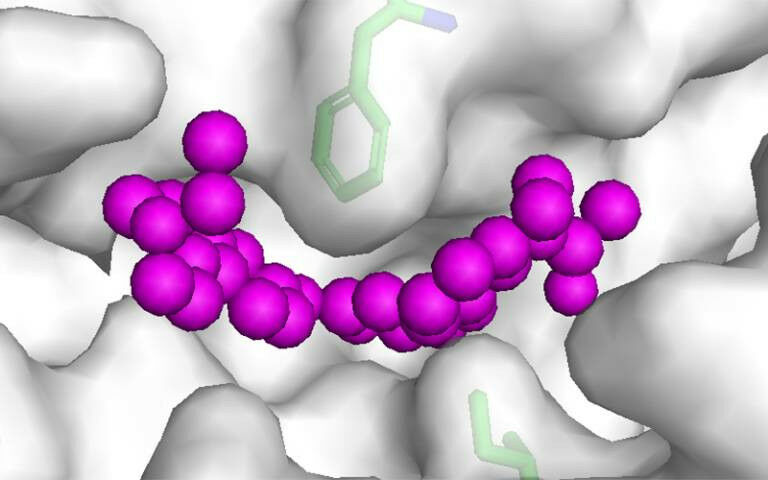
1938 chemical compound - 1938 P13K activator bound to P13Kalpha
1938 chemical compound - 1938 P13K activator bound to P13Kalpha Research led by UCL, in partnership with the MRC Laboratory of Molecular Biology (MRC LMB) and AstraZeneca, has identified a new compound that can stimulate nerve regeneration after injury, as well as protect cardiac tissue from the sort of damage seen in heart attack. The study, published in Nature , identified a chemical compound, named '1938', that activates the PI3K signalling pathway, and is involved in cell growth. Results from this early research showed the compound increased neuron growth in nerve cells, and in animal models, it reduced heart tissue damage after major trauma and regenerated lost motor function in a model of nerve injury. Though further research is needed to translate these findings into the clinic, 1938 is one of just a few compounds in development that can promote nerve regeneration, for which there are currently no approved medicines. Phosphoinositide 3-kinase (PI3K) is a type of enzyme that helps to control cell growth. It is active in various situations, such as initiating wound healing, but its functions can also be hijacked by cancer cells to allow them to proliferate. As a result, cancer drugs have been developed that inhibit PI3K to restrict tumour growth.
TO READ THIS ARTICLE, CREATE YOUR ACCOUNT
And extend your reading, free of charge and with no commitment.