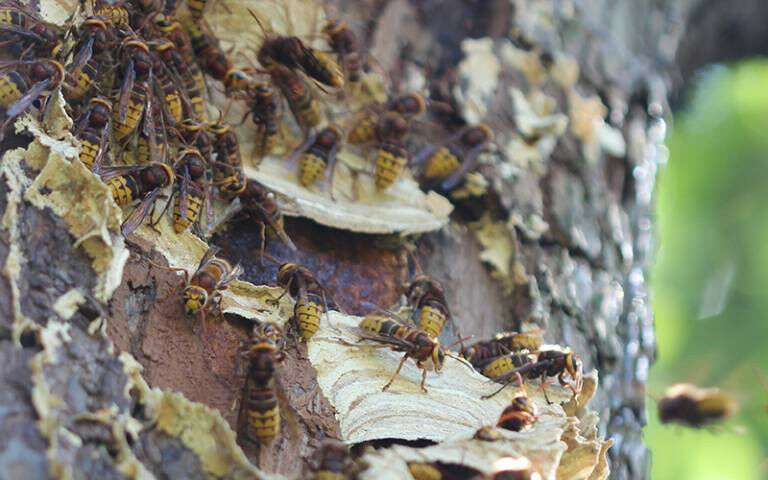
European hornets - European hornets ( Vespa crabro ). Credit: Dr Patrick Kennedy (University of Bristol)
European hornets - European hornets ( Vespa crabro ). Credit: Dr Patrick Kennedy (University of Bristol) The genomes of two hornet species, the European hornet and the Asian hornet (or yellow-legged hornet) have been sequenced for the first time by a team led by UCL scientists. By comparing these decoded genomes with that of the giant northern hornet, which has recently been sequenced by another team, the researchers have revealed clues suggesting why hornets have been so successful as invasive species across the globe. Hornets are the largest of the social wasps; they play important ecological roles as top predators of other insects. In their native regions, they are natural pest controllers, helping regulate the populations of insects such as flies, beetles, caterpillars and other types of wasps. These services are critical for healthy, functional ecosystems, as well as for agriculture. But hornets also tend to be very successful as invasive species.
TO READ THIS ARTICLE, CREATE YOUR ACCOUNT
And extend your reading, free of charge and with no commitment.