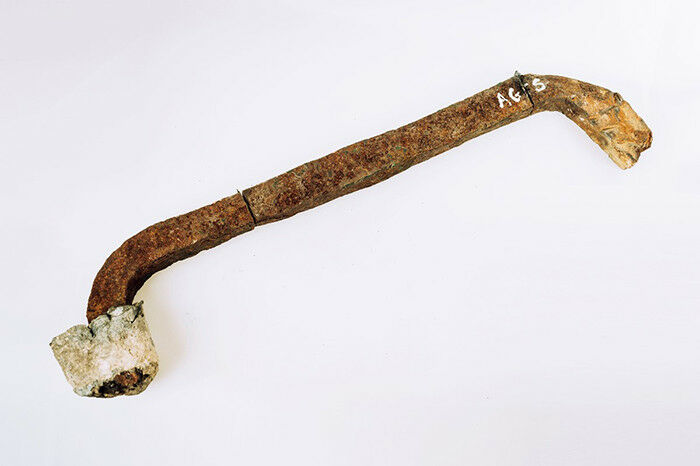
 Cramp from Notre Dame restoration site, after sawing in preparation for metallographic analysis. © Cyril Fresillon / IRAMAT / NIMBE / ArScAn / CEA / Chantier Scientifique Notre-Dame de Paris / French Ministry of Culture / CNRS
Cramp from Notre Dame restoration site, after sawing in preparation for metallographic analysis. Cyril Fresillon / IRAMAT / NIMBE / ArScAn / CEA / Chantier Scientifique Notre-Dame de Paris / French Ministry of Culture / CNRS Study of metal components from Notre Dame site. Cyril FRESILLON / IRAMAT / NIMBE / ArScAn / CEA / Chantier Scientifique Notre-Dame de Paris / French Ministry of Culture / CNRS Is Notre Dame the original Iron Lady? Evidence of the earliest known use of the metal for the construction of a Gothic cathedral has been uncovered by a team of scientists 1 working at the Notre Dame research site (CNRS / French Ministry of Culture). Among the tons of metal revealed by the fire, the team was especially interested in the thousands of iron cramps used on all levels of the structure to hold its stone blocks together. Many were previously unknown to exist, including a series of cramps at the tops of the walls, below the burnt roof structure. The restoration of the cathedral now in progress-led by Rebâtir Notre-Dame de Paris ('Rebuild Notre Dame') , the contracting public entity, and executed under the direction of French conservation architects -offered an opportunity to study twelve of these cramps. Samples taken were submitted to thorough metallographic analysis and radiocarbon dating made possible through new methods developed by the scientists.
TO READ THIS ARTICLE, CREATE YOUR ACCOUNT
And extend your reading, free of charge and with no commitment.
Your Benefits
- Access to all content
- Receive newsmails for news and jobs
- Post ads