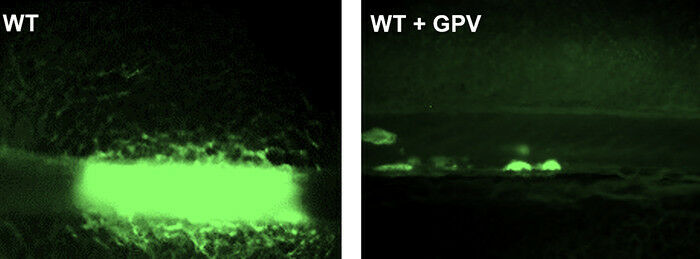
Treatment with soluble GPV prevents the formation of a vessel-occluding thrombus in an experimental mouse model of thrombosis formation (right). On the left, a vessel-occluding thrombus of an untreated mouse is shown.
Treatment with soluble GPV prevents the formation of a vessel-occluding thrombus in an experimental mouse model of thrombosis formation ( right ). On the left, a vessel-occluding thrombus of an untreated mouse is shown. The glycoprotein V of the blood platelets is an important switch point for haemostasis and thrombus formation. This new finding could have great clinical potential. When our blood vessels are injured by cuts, abrasions, or bruises, it is vital that the bleeding is stopped, and the wound is sealed. This process is called hemostasis and involves two main components: First, blood platelets attach to the wound edges, form a plug and provisionally seal the injury. Secondly, blood coagulation or the coagulation cascade is initiated, leading to the formation of long fibrin fibers, which together with platelets seal the wound tightly.
TO READ THIS ARTICLE, CREATE YOUR ACCOUNT
And extend your reading, free of charge and with no commitment.