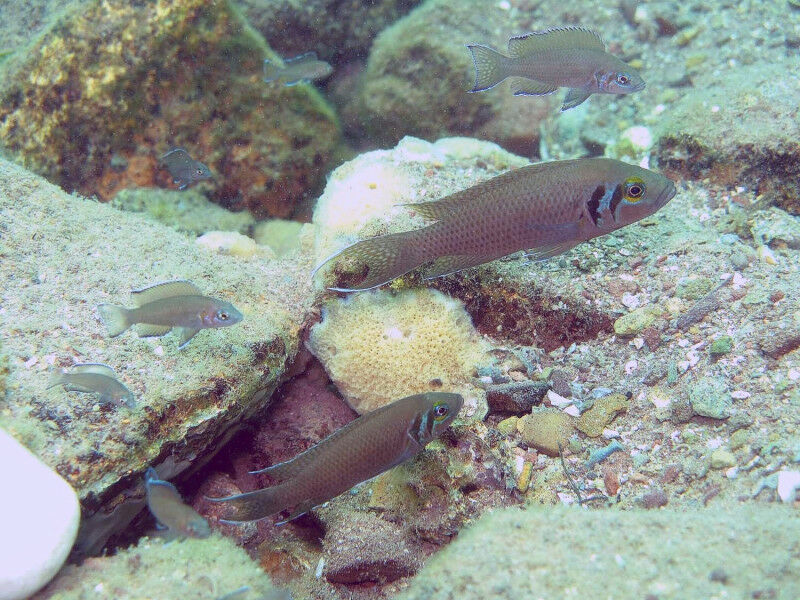
 A group of cooperatively breeding cichlids of the species Neolamprologus pulcher in Lake Tanganyika, with the dominant breeding pair (largest fish) and brood care helpers of different ages (smaller fish).
A group of cooperatively breeding cichlids of the species Neolamprologus pulcher in Lake Tanganyika, with the dominant breeding pair (largest fish) and brood care helpers of different ages (smaller fish). Dario Josi - In group-living species, either the male or female offspring disperse from their natal territory at some stage. Researchers from the University of Bern and the University of Veterinary Medicine, Vienna, unveiled in African cichlids which factors determine territory inheritance and emigration. It is a widespread tradition in human agricultural populations that either sons or daughters inherit the parental property; the other gender must emigrate. In rural areas of Central Europe, sons were usually designated as heirs of the property and farm, while daughters were expected to start their families elsewhere. In social animals, either the male or the female offspring migrate: in mammals it is usually the males, in birds it is the females who give way to their siblings at home. This raises the question which factors determine these alternative roles.
TO READ THIS ARTICLE, CREATE YOUR ACCOUNT
And extend your reading, free of charge and with no commitment.
Your Benefits
- Access to all content
- Receive newsmails for news and jobs
- Post ads