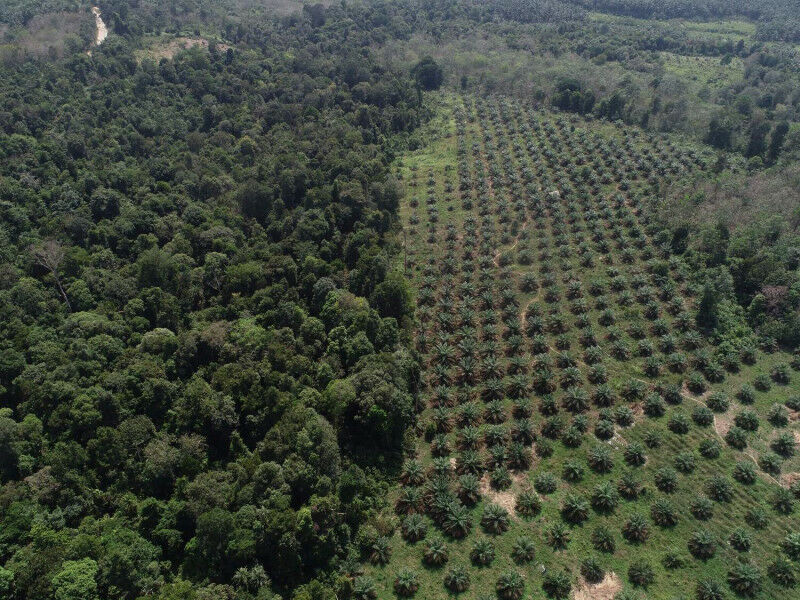
Die Forscherinnen und Forscher verglichen die Auswirkungen von lebenden Wurzeln oder Laubstreu in kleinen Versuchsflächen im Regenwald (links) mit Ölpalmenplantagen (rechts). Photo: Ananggadipa R
Die Forscherinnen und Forscher verglichen die Auswirkungen von lebenden Wurzeln oder Laubstreu in kleinen Versuchsflächen im Regenwald ( links ) mit Ölpalmenplantagen ( rechts ). Photo: Ananggadipa R Research team led by Göttingen University reveals that living roots are as important as dead leaves to sustain tropical soil biodiversity A research team led by the University of Göttingen has shed new light on the importance of plant roots for belowground life, particularly in the tropics. Millions of small creatures toiling in a single hectare of soil including earthworms, springtails, mites, insects, and other arthropods are crucial for decomposition and soil health. For a long time, it was believed that leaf litter is the primary resource for these animals. However, this recent study is the first to provide proof that resources derived from plant roots drive soil animal communities in the tropics. The results were published in the journal Ecology Letters. Zum Vergleich entfernten sie alle toten Blätter, die Hauptressource der Zersetzer, von anderen Versuchsflächen.
TO READ THIS ARTICLE, CREATE YOUR ACCOUNT
And extend your reading, free of charge and with no commitment.