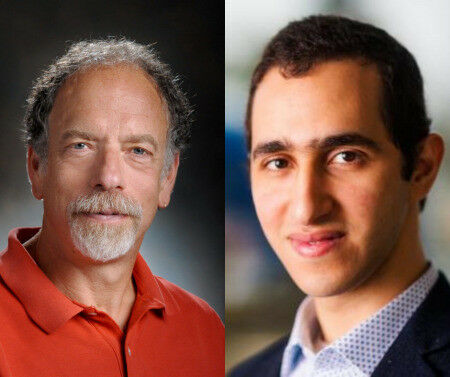
L-R: Peter Ruben, biomedical physiology and kinesiology professor, SFU; Mena Abdelsayed, former researcher, SFU
L-R: Peter Ruben, biomedical physiology and kinesiology professor, SFU; Mena Abdelsayed, former researcher, SFU Drug Discovered by SFU Researchers Shows Potential Life-Saving Results in Treating Cardiac Arrhythmias Scientists at Simon Fraser University (SFU) and the Lankenau Institute for Medical Research (LIMR) near Philadelphia have found that a drug discovered at SFU and patented several years ago may have potential lifesaving results in the treatment of conditions leading to sudden cardiac death. The drug, known as AR-787, was originally discovered and designed by former PhD candidate Mena Abdelsayed as a pharmacological solution for arrhythmias . The so-called J Wave syndromes (JWS), consisting of Brugada syndrome and early repolarization syndromes, occur in about one in 2,000 people and are associated with life-threatening cardiac arrhythmias-complications with the rate or rhythm of the heart. In some patients, these arrhythmias can lead to sudden cardiac death and, in some cases, may be triggered by hypothermia. The first line of treatment for high-risk patients often involves the use of an implantable cardioverter defibrillator (ICD), though this route has shown to be problematic, especially for young patients and those experiencing frequent shocks from an ICD. A recently published study led by LIMR, involving current and former SFU researchers Mena Abdelsayed, Mohamed Fouda, and SFU biomedical physiology and kinesiology professor Peter Ruben, has shed light on a possible pharmacological approach to treat arrhythmic activity in the heart caused by JWS.
TO READ THIS ARTICLE, CREATE YOUR ACCOUNT
And extend your reading, free of charge and with no commitment.