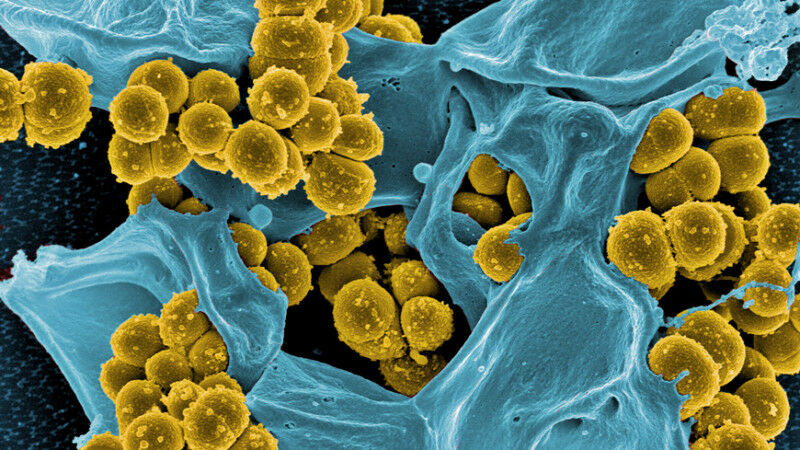
Antibiotic-resistant staphylococci (yellow) are fought by a white blood cell (blue). Image: Electron microscopy (NIAID), digitally colored (Empa)
Antibiotic-resistant staphylococci ( yellow ) are fought by a white blood cell ( blue ). Image: Electron microscopy (NIAID), digitally colored (Empa) In the case of blood poisoning, the bacteria in the blood must be identified as fast as possible so that a life-saving therapy can be started. researchers have now developed "sepsis sensors" with magnetic nanoparticles that detect bacterial pathogens within a short period of time and identify suitable candidates for antibiotic therapies. For Qun Ren, every minute counts. The Empa researcher and her team are currently developing a diagnostic procedure that can detect life-threatening blood poisoning caused by staphylococcus bacteria rapidly. This is because staphylococcal sepsis is fatal in up to 40 percent of the cases. An infection with the spherical bacteria may have started as a local skin disease or pneumonia.
TO READ THIS ARTICLE, CREATE YOUR ACCOUNT
And extend your reading, free of charge and with no commitment.